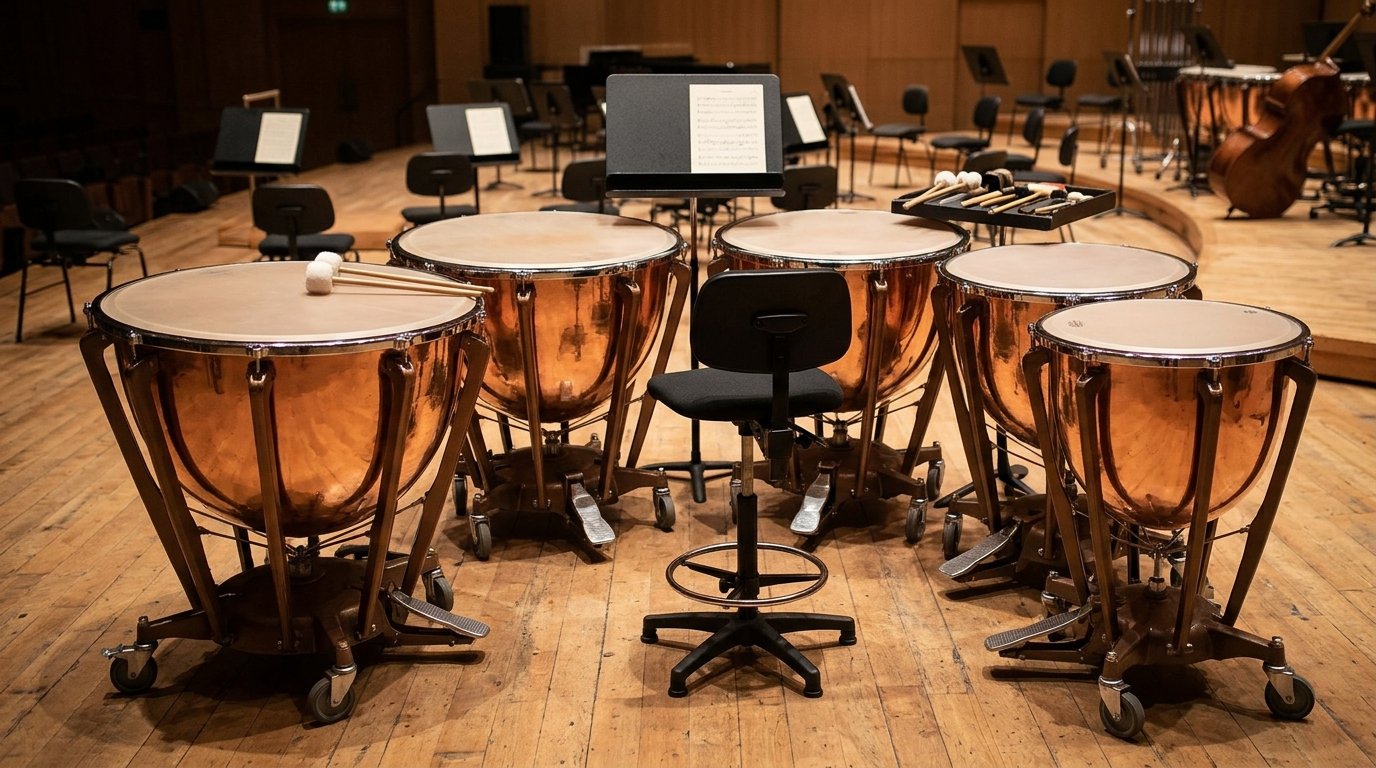
Music has a unique ability to create emotion, build excitement, and bring different instruments together into one unforgettable experience. Among the many instruments used in orchestras and musical performances, drums timpani hold a particularly important position. Known for their deep, resonant tones and powerful presence, timpani drums help shape the rhythm, harmony, and dramatic atmosphere of musical compositions.
Unlike ordinary drums that primarily produce rhythmic sounds, timpani are capable of producing specific musical pitches. This ability makes them especially valuable in classical music, orchestral performances, film scores, and modern musical arrangements. Their distinctive sound can create anything from a gentle musical background to a dramatic thunder-like effect.
Whether you are a music student, percussion enthusiast, professional musician, or someone exploring orchestral instruments for the first time, understanding timpani can help you appreciate their unique contribution to music.
This guide explores the history, construction, different types, playing techniques, tuning systems, and musical applications of timpani drums.
What Are Drums Timpani?
Timpani are large percussion instruments that produce musical notes through a stretched membrane placed over a bowl-shaped body. They are commonly found in orchestras, concert bands, marching ensembles, and professional percussion groups.
The word timpani comes from Italian and is the plural form of timpano. In English, musicians often call them kettle drums because their rounded copper or metal bowls resemble traditional cooking kettles.
A typical timpani consists of three main components:
- Drumhead: The stretched surface that vibrates when struck.
- Bowl: The large resonating chamber that helps produce the instrument’s characteristic sound.
- Tuning mechanism: A pedal or adjustment system that changes the tension of the drumhead and controls its musical pitch.
Most professional orchestras use several timpani drums of different sizes. Each drum covers a particular range of notes, allowing the percussionist to play melodies, harmonic support, and rhythmic patterns.
One of the most interesting features of timpani is their ability to change pitch during a performance. Modern pedal timpani allow musicians to adjust the tension of the drumhead using foot-operated mechanisms.
This makes them much more versatile than many traditional percussion instruments.
The History and Evolution of Timpani Drums
The history of timpani stretches back several centuries. Their development is closely connected to military music, royal ceremonies, and the growth of European orchestras.
Early Origins of Kettle Drums
The earliest forms of kettle drums appeared in ancient civilizations and were used for ceremonial and military purposes. Different cultures developed large bowl-shaped drums that produced powerful sounds capable of carrying across open spaces.
These instruments were particularly useful during battles, royal celebrations, and public gatherings.
During the medieval period, kettle drums became increasingly popular in Europe. They were introduced through cultural exchanges and were often associated with cavalry units and royal courts.
Timpani in Royal and Military Music
During the 15th and 16th centuries, timpani became important instruments in European ceremonial music.
They were frequently played alongside trumpets during royal events, military parades, and official celebrations. Their strong sound made them suitable for outdoor performances.
At this stage, timpani were generally played in pairs, with each drum tuned to a different pitch.
Development in Classical Music
The 17th and 18th centuries marked an important period in the development of timpani.
As orchestral music became more sophisticated, composers began using percussion instruments in more creative ways.
Composers such as Johann Sebastian Bach, Joseph Haydn, Wolfgang Amadeus Mozart, and Ludwig van Beethoven helped establish timpani as an essential part of orchestral arrangements.
Instead of simply supporting ceremonial music, timpani began contributing to the structure and emotional character of compositions.
Modern Timpani Development
During the 19th and 20th centuries, improvements in materials and mechanical engineering transformed timpani.
New tuning systems allowed musicians to change pitches more accurately and efficiently. Pedal mechanisms made it possible to adjust drumhead tension without manually tightening individual screws.
Modern timpani are now available with advanced pedal systems, precision tuning indicators, improved drumheads, and carefully designed resonating bowls.
These developments have made the instrument more flexible and reliable for professional musicians.
How Do Timpani Drums Work?
Understanding how timpani produce sound helps explain why they are different from ordinary percussion instruments.
When a percussionist strikes the drumhead with a timpani mallet, the membrane begins vibrating. These vibrations move the surrounding air inside the bowl, creating sound waves that travel outward.
The bowl acts as a resonating chamber, helping produce the instrument’s deep and recognizable tone.
Several factors influence the sound of a timpani drum.
Drumhead Tension
The tension of the drumhead determines the pitch of the instrument.
When the membrane is tightened, it generally produces a higher note. When the tension is reduced, the pitch becomes lower.
Modern pedal timpani make these adjustments easier during musical performances.
Drum Size
The size of the drum also affects its musical range.
Larger timpani generally produce lower notes, while smaller drums are designed for higher pitches.
The diameter of the drumhead and the depth and shape of the bowl influence the overall sound.
Mallet Selection
The type of mallet used by a percussionist can dramatically change the instrument’s tone.
Soft mallets produce warm, rounded sounds, while harder mallets create sharper attacks and more defined notes.
Professional players choose mallets according to the composition, musical style, and desired expression.
Playing Position
Where the musician strikes the drumhead also influences the sound.
Striking near the center produces a different tonal quality from striking closer to the edge. Skilled timpani players use different striking positions to create a wide range of musical expressions.
Different Types of Timpani Drums
Timpani are available in different sizes and designs. Each type serves a particular purpose within orchestral and percussion performances.
1. Pedal Timpani
Pedal timpani are among the most widely used instruments in professional orchestras.
They feature a foot-operated pedal that allows the musician to change the tension of the drumhead while playing.
This system makes it possible to move between different musical notes without stopping the performance.
Pedal timpani are especially useful in complex orchestral compositions that require frequent pitch changes.
2. Chain Timpani
Chain timpani use a mechanical chain system connected to tension-adjusting components.
The chain allows the player to adjust the drumhead tension and change its pitch.
These instruments are less common in modern professional orchestras but remain an interesting part of timpani development.
3. Screw-Tuned Timpani
Screw-tuned timpani use individual tension screws positioned around the drumhead.
The musician adjusts the screws to change the membrane tension and achieve the required pitch.
Although this system can provide reliable tuning, it generally takes longer to make adjustments than modern pedal mechanisms.
4. Professional Concert Timpani
Professional concert timpani are designed for orchestras, conservatories, and advanced percussion performances.
They typically feature high-quality drumheads, carefully engineered bowls, and precise pedal mechanisms.
These instruments are built to provide consistent pitch, balanced resonance, and excellent tonal control.
5. Portable Timpani
Portable timpani are designed for musicians who need to transport their instruments between rehearsal spaces, schools, concert venues, and performance locations.
They may feature lightweight construction or compact designs.
Although portability is important, manufacturers still aim to preserve the sound quality and tuning stability expected from timpani.
Common Timpani Sizes and Their Musical Ranges
Timpani are available in several sizes. Professional orchestras commonly use a collection of four or five drums to cover a broad musical range.
The most familiar sizes include:
| Timpani Size | General Musical Range |
|---|---|
| 20 inches | Higher notes |
| 23 inches | Medium-high notes |
| 26 inches | Medium notes |
| 29 inches | Medium-low notes |
| 32 inches | Lower notes |
These measurements refer to approximate drumhead diameters. The actual pitch range depends on the instrument’s design and manufacturer.
A larger drum generally produces deeper sounds, while a smaller drum can produce higher musical notes.
Using multiple drums allows a percussionist to play different pitches without constantly changing the tuning of a single instrument.
What Do Timpani Drums Sound Like?
The sound of timpani is one of their most recognizable characteristics.
They produce deep, resonant tones that can be powerful, dramatic, gentle, or rhythmic depending on how they are played.
Unlike a standard bass drum, which generally produces an indefinite pitch, timpani can produce clearly identifiable musical notes.
This makes them valuable for both rhythm and harmony.
Deep and Powerful Sounds
Large timpani produce rich low-frequency sounds that can support the foundation of an orchestral composition.
These notes often appear during dramatic musical passages, creating a sense of strength and importance.
Soft and Gentle Sounds
Timpani are not limited to loud musical effects.
With soft mallets and controlled playing techniques, musicians can produce quiet, warm tones that blend beautifully with strings and woodwind instruments.
Thunder-Like Effects
One of the most famous uses of timpani is creating thunder-like sounds.
Composers frequently use rolling strokes and gradual increases in volume to build tension and excitement.
These effects are particularly common in dramatic orchestral music and film soundtracks.
Rhythmic Sounds
Timpani also provide rhythmic support.
They can emphasize important beats, reinforce musical transitions, and help establish the energy of a composition.
How to Play Timpani Drums
Learning to play timpani requires a combination of rhythm, listening skills, physical coordination, and musical understanding.
Although the instrument may appear simple, professional timpani playing involves considerable technical skill.
Learn Proper Sitting Position
Most timpani are played while the musician is standing or sitting, depending on the instrument’s arrangement and performance requirements.
The player should maintain a comfortable posture with enough space to reach every drum.
Proper positioning helps prevent unnecessary physical strain and allows smooth movement between instruments.
Understand Mallet Techniques
Mallet technique is one of the most important parts of timpani playing.
Players typically hold a mallet in each hand and use controlled wrist movements to strike the drumhead.
The goal is to produce a consistent sound without unnecessary tension.
Beginners should start with basic strokes before progressing to more complicated rhythmic patterns.
Practice Single Strokes
Single strokes involve alternating between the left and right hands.
They help develop coordination, timing, and consistent sound production.
Practicing slowly allows beginners to focus on accuracy before increasing speed.
Learn Timpani Rolls
Timpani rolls are produced by playing repeated strokes in quick succession.
They create a sustained sound that can gradually become louder or softer.
Rolls are especially important in orchestral music because they allow timpani to maintain musical energy over longer passages.
Develop Listening Skills
Timpani players must listen carefully to other musicians.
They need to recognize musical pitches, follow the conductor, and adjust their playing to match the overall sound of the ensemble.
Developing a strong sense of pitch is particularly important because timpani are tuned percussion instruments.
Understanding Timpani Tuning Systems
Tuning is one of the most important skills required to play timpani professionally.
Unlike many percussion instruments, timpani must be tuned to specific musical notes.
The player needs to understand pitch relationships and make sure each drum produces the correct note before and during a performance.
Manual Tuning
Traditional timpani use tension screws to adjust the drumhead.
The musician tightens or loosens the screws to achieve the desired pitch.
This approach requires patience and careful listening because uneven tension can affect the quality of the sound.
Pedal Tuning
Modern pedal timpani use a foot-operated system to control the drumhead tension.
Moving the pedal changes the pitch of the instrument.
Many professional instruments also include tuning indicators that help players identify the selected note.
Using a Tuning Reference
Musicians commonly use pitch references, tuning instruments, or electronic tuners when preparing their timpani.
However, experienced performers also develop the ability to recognize pitches by ear.
Accurate tuning is essential for ensuring that timpani blend correctly with the rest of the orchestra.
The Role of Timpani in an Orchestra
Timpani are a central part of the percussion section in many orchestras.
They work alongside instruments such as bass drums, cymbals, snare drums, triangles, and other percussion instruments.
Their responsibilities extend beyond simply providing loud sounds.
Supporting Musical Harmony
Because timpani can play definite pitches, they often reinforce the harmonic foundation of a musical composition.
They may emphasize important notes within a chord or support changes between musical sections.
Creating Musical Drama
Composers use timpani to increase tension and excitement.
A series of powerful strikes can make a musical passage feel energetic, dramatic, and memorable.
Strengthening Rhythmic Structure
Timpani frequently reinforce important rhythmic patterns.
Their sound helps establish musical accents and supports the timing of other instruments.
Connecting Musical Sections
A timpani roll or carefully placed strike can help connect different sections of a composition.
These musical transitions allow the orchestra to move naturally between quiet and energetic passages.
Famous Composers and Their Use of Timpani
Throughout classical music history, many well-known composers have explored the expressive possibilities of timpani.
Ludwig van Beethoven
Beethoven helped expand the role of timpani in orchestral music.
His symphonies feature memorable percussion passages that demonstrate how timpani can contribute to musical structure and dramatic intensity.
His Symphony No. 9 is a particularly important example of the powerful relationship between percussion and orchestral music.
Wolfgang Amadeus Mozart
Mozart used timpani to add balance, rhythm, and emphasis to orchestral compositions.
His works demonstrate how percussion can support musical elegance without overwhelming other instruments.
Joseph Haydn
Haydn played an important role in developing the classical symphony.
His orchestral compositions helped establish timpani as a regular part of the symphonic percussion section.
Gustav Mahler
Mahler used timpani extensively to create dramatic musical effects.
His symphonies demonstrate the instrument’s ability to move between subtle accompaniment and powerful orchestral passages.
Timpani in Modern Music and Film Soundtracks
Although timpani are traditionally associated with classical orchestras, their influence extends into modern entertainment.
Film composers frequently use timpani to create suspense, excitement, and emotional depth.
Their deep tones work particularly well in scenes involving action, conflict, mystery, and dramatic transitions.
Film Music
Timpani are common in orchestral film scores.
They help create powerful musical moments and support the emotional direction of a scene.
Video Game Music
Many modern video game soundtracks use orchestral percussion to create immersive musical environments.
Timpani can support battle sequences, dramatic introductions, and important story moments.
Contemporary Orchestral Music
Modern composers experiment with different timpani techniques, rhythmic structures, and combinations of percussion instruments.
This allows the instrument to remain relevant in contemporary musical performances.
What Is the Difference Between Timpani and Regular Drums?
Although timpani belong to the percussion family, they have several important differences from ordinary drums.
| Feature | Timpani | Regular Drums |
|---|---|---|
| Pitch | Definite musical pitch | Often indefinite pitch |
| Construction | Bowl-shaped body | Various shell designs |
| Tuning | Changes musical notes | Usually adjusts tonal tension |
| Playing Style | Mallet-based techniques | Sticks, brushes, or hands |
| Main Uses | Orchestral music | Multiple musical genres |
| Sound | Deep and resonant | Varies by drum type |
The biggest difference is that timpani can play specific musical notes.
A standard snare drum or bass drum is generally used for rhythmic purposes rather than playing melodies or defined pitches.
This makes timpani particularly valuable in orchestral arrangements.
How to Choose the Right Timpani Drums
Choosing the right timpani depends on your experience, musical goals, budget, and performance environment.
A beginner studying percussion may need a different instrument from a professional orchestral musician.
Before purchasing timpani, consider the following factors.
Drum Size and Range
Think about the musical range you need.
Smaller drums are useful for higher notes, while larger drums provide deeper tones.
A complete set offers greater flexibility but requires more space and investment.
Tuning Mechanism
Pedal timpani are generally a practical choice for musicians who need to change pitches frequently.
Manual tuning systems may be suitable for educational environments or situations where rapid pitch changes are unnecessary.
Construction Materials
The bowl material affects the instrument’s resonance and tonal characteristics.
Copper is a traditional material used in many high-quality timpani. Fiberglass and other materials are also available.
Drumhead Quality
The drumhead plays a major role in determining sound quality.
Traditional calfskin heads and modern synthetic heads offer different characteristics.
Synthetic heads are generally easier to maintain in changing environmental conditions, while calfskin heads are valued for their traditional tonal qualities.
Budget and Maintenance
Professional timpani can represent a significant investment.
Consider not only the purchase price but also the cost of replacement drumheads, maintenance, transportation, and storage.
For students and educational institutions, durability and ease of maintenance are particularly important.
How to Maintain Timpani Drums
Proper maintenance helps preserve the sound quality, tuning accuracy, and lifespan of timpani.
These instruments contain mechanical components that require regular attention.
Clean the Drumhead Carefully
Remove dust and debris using an appropriate soft cleaning material.
Avoid using harsh chemicals or excessive moisture that could damage the drumhead.
Inspect the Pedal Mechanism
Check the pedal system regularly to make sure it moves smoothly.
If the pedal becomes difficult to operate or fails to maintain tension, professional adjustment may be necessary.
Protect the Bowl
Keep the bowl free from unnecessary impacts and scratches.
Use protective covers when transporting or storing the instrument.
Check Drumhead Condition
Inspect the drumhead for signs of wear, damage, or uneven tension.
A damaged or deteriorating head can negatively affect sound quality and tuning stability.
Store Instruments Properly
Timpani should be stored in a clean, dry environment.
Extreme temperature changes and humidity can affect drumhead tension and instrument performance.
Why Are Timpani Important in Musical Education?
Timpani are valuable instruments for students studying percussion and orchestral performance.
Learning to play them develops several important musical abilities.
First, students develop pitch recognition because timpani require accurate tuning.
Second, they improve coordination by learning to use both hands and operate foot pedals.
Third, they develop listening skills by following conductors and coordinating with other musicians.
Finally, studying timpani provides a deeper understanding of orchestral arrangements and musical expression.
For students interested in professional percussion careers, timpani training can become an important part of their musical education.
Frequently Asked Questions About Drums Timpani
1. What are drums timpani used for?
Timpani are used to provide rhythmic support, harmonic emphasis, musical accents, and dramatic effects in orchestras, concert bands, and other musical performances.
2. Why are timpani called kettle drums?
They are called kettle drums because their large, rounded bowls resemble traditional kettles. The term has been used for these instruments for centuries.
3. Can timpani play different musical notes?
Yes. Timpani are tuned percussion instruments that can produce specific musical pitches. Modern pedal systems allow musicians to change notes during performances.
4. How many timpani drums are in an orchestra?
Many professional orchestras use four timpani, although some performances require three, five, or more depending on the musical composition.
5. What are timpani made of?
Traditional timpani often have copper bowls, although fiberglass and other materials are also used. Their drumheads may be made from calfskin or synthetic materials.
6. What is the difference between timpani and bass drums?
Timpani produce definite musical pitches and are tuned to specific notes. Bass drums generally produce low, indefinite-pitch sounds and are mainly used for rhythmic emphasis.
7. Are timpani difficult to learn?
Learning basic timpani techniques is possible with regular practice. However, professional playing requires advanced rhythm, pitch recognition, coordination, tuning knowledge, and orchestral listening skills.
8. What are timpani mallets?
Timpani mallets are specialized sticks with padded heads used to strike the drumhead. Different mallet materials and hardness levels create different tonal qualities.
9. Do timpani need regular tuning?
Yes. Timpani must be tuned to the notes required by a musical composition. Temperature, humidity, drumhead condition, and mechanical adjustments can influence tuning.
10. Are timpani used outside classical music?
Yes. Timpani appear in film scores, video game soundtracks, contemporary orchestral music, concert bands, and other musical productions.
Conclusion
Drums timpani are among the most versatile and expressive instruments in the percussion family. Their ability to produce specific musical pitches, combined with their deep resonance and powerful sound, makes them essential to many orchestral performances.
From their early development as military and ceremonial instruments to their modern role in professional orchestras and film soundtracks, timpani have evolved into sophisticated musical instruments.
Understanding their construction, tuning systems, playing techniques, and musical applications reveals why composers and percussionists continue to value them.
Whether you are beginning your musical journey or expanding your knowledge of orchestral instruments, exploring timpani offers an interesting way to understand the connection between rhythm, harmony, and musical expression.
Explore more: Fidget Spinner Technique: Easy Tricks and Spins for Beginners