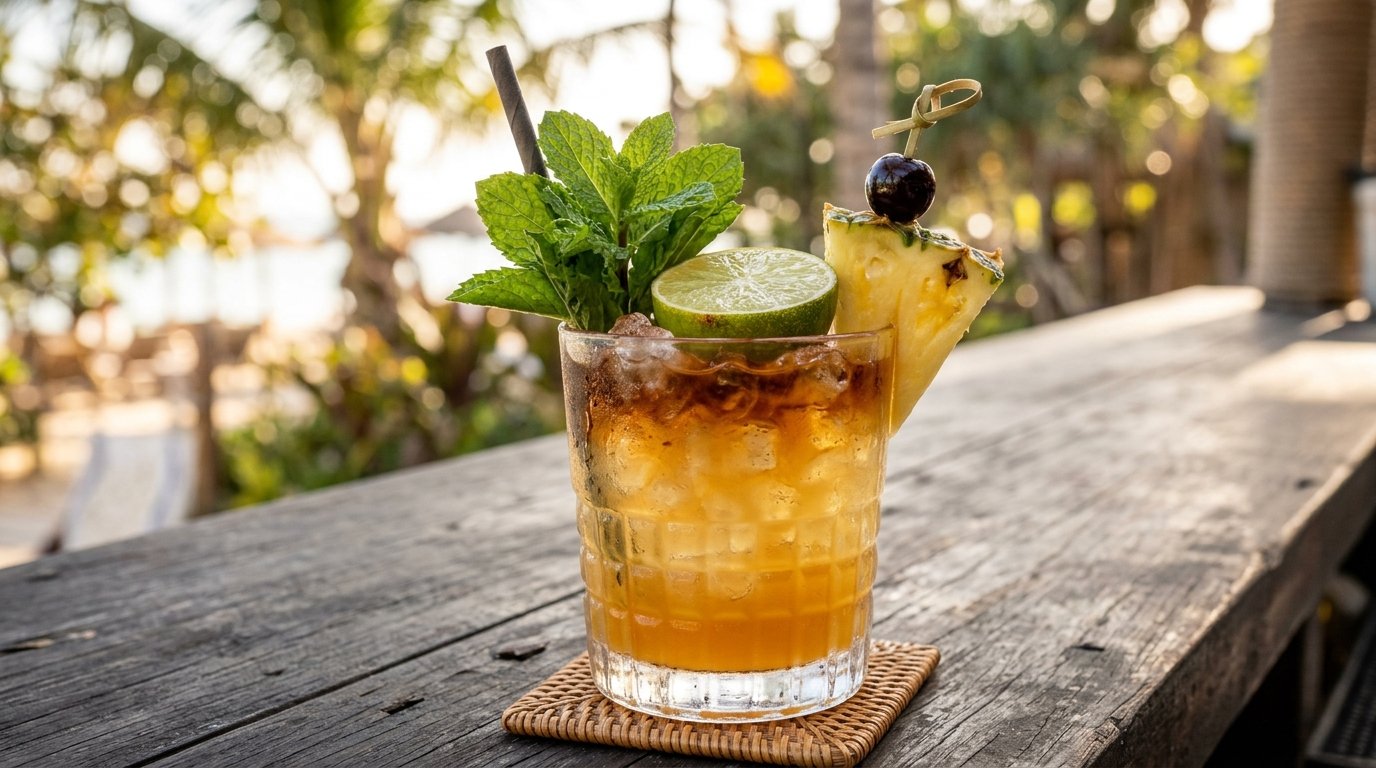
Maïtaï, commonly written as Mai Tai, is a famous tropical cocktail known for its refreshing citrus flavor, distinctive rum base, and connection to Polynesian-inspired bar culture. It is one of the most recognizable drinks associated with tropical destinations, beach resorts, and classic cocktail traditions.
The drink is traditionally prepared using rum, fresh lime juice, orange curaçao, orgeat syrup, and a small amount of additional sweetener. These ingredients create a balanced combination of sweetness, citrus acidity, and rich rum flavor. Although modern versions sometimes include pineapple juice, orange juice, and other tropical ingredients, the traditional Mai Tai has a relatively simple recipe.
Beyond its ingredients, Maïtaï represents an interesting part of cocktail history. Its popularity grew alongside the tiki movement, which introduced tropical-themed restaurants, decorative glassware, and imaginative drinks to American popular culture.
Today, the Mai Tai continues to appear on cocktail menus around the world. Its recognizable appearance, adaptable flavor, and historical background make it an enduring part of international cocktail culture.
The Meaning and Origin of Maïtaï
The name Maïtaï comes from the Tahitian word maita’i, which means good or excellent. This meaning reflects the enthusiasm traditionally associated with the drink and its reputation as a memorable tropical cocktail.
The most widely accepted origin story connects the Mai Tai with Victor J. Bergeron, better known as Trader Vic. According to his account, he created the cocktail in 1944 at his restaurant in Oakland, California.
Bergeron reportedly prepared the drink for friends visiting from Tahiti. After tasting it, one of his guests responded with an expression of appreciation in Tahitian. The reaction inspired the name Mai Tai.
However, the drink’s history includes another important claim. Donn Beach, the founder of Don the Beachcomber, also received credit for developing an earlier cocktail associated with the name. His version reportedly appeared during the 1930s and contained a different combination of ingredients.
Although the exact history remains debated, Trader Vic’s version became the internationally recognized formula.
The drink eventually gained considerable popularity in Hawaii, particularly during the 1950s, when tropical tourism and tiki-inspired hospitality became increasingly influential.
The History of the Mai Tai Cocktail
Understanding the history of Maïtaï helps explain why it became much more than an ordinary mixed drink.
The Early Days of Tiki Culture
During the early twentieth century, American restaurants and bars began experimenting with tropical themes. These establishments offered customers an imaginative escape through island-inspired decorations, exotic-looking drinks, and distinctive hospitality experiences.
Donn Beach played an important role in establishing this style through his Don the Beachcomber restaurant. His approach combined creative cocktails with elaborate tropical surroundings.
Trader Vic later developed his own interpretation of this atmosphere. His restaurants became known for their distinctive presentation, rum-based drinks, and Polynesian-inspired interiors.
The Mai Tai eventually became one of the best-known cocktails associated with this movement.
The Popularity of the 1940s and 1950s
The 1940s and 1950s were important decades for the Mai Tai. Its reputation expanded as tropical restaurants and cocktail bars introduced the drink to new audiences.
Its popularity increased further when it became part of the hospitality experience at Hawaiian hotels.
Travelers visiting Hawaii encountered the drink as part of the island-inspired atmosphere. This helped establish a strong connection between the Mai Tai, tropical vacations, and beachside entertainment.
International Recognition
As international travel expanded, the Mai Tai became familiar to bartenders and cocktail enthusiasts in different countries.
Restaurants developed their own interpretations, sometimes adding pineapple juice, orange juice, grenadine, or different varieties of rum.
Although these adaptations changed the original flavor profile, they helped introduce the drink to a wider audience.
Today, traditional and modern versions can both be found in cocktail establishments worldwide.
Traditional Maïtaï Ingredients
A traditional Mai Tai depends on a relatively small number of ingredients. Each component contributes something important to the final flavor.
1. Rum
Rum is the foundation of a classic Mai Tai. It provides the drink with its characteristic depth and complexity.
Aged Jamaican rum is particularly associated with the original Trader Vic recipe. Its rich flavor can include notes of caramel, tropical fruit, spice, and molasses.
Some modern recipes combine aged rum with white rum to create a different balance.
2. Fresh Lime Juice
Fresh lime juice adds acidity and brightness. It balances the sweetness of the syrup and brings freshness to the rum.
Using freshly squeezed lime juice generally produces a better result than relying on artificial citrus flavorings.
3. Orange Curaçao
Orange curaçao is an orange-flavored liqueur that adds sweetness and citrus complexity.
It helps connect the sharp lime flavor with the richer notes of rum and almond syrup.
Depending on the recipe, bartenders may use another suitable orange liqueur.
4. Orgeat Syrup
Orgeat is a sweet almond-flavored syrup that gives the traditional Mai Tai its recognizable character.
It contributes a smooth texture and subtle nutty flavor. Some versions also contain floral notes, depending on the ingredients used to produce the syrup.
Orgeat is one of the defining ingredients that separates a traditional Mai Tai from many other tropical cocktails.
5. Simple Syrup
Simple syrup is made by dissolving sugar in water. It provides additional sweetness and helps balance the acidity of the lime juice.
The amount required depends on the sweetness of the other ingredients.
6. Crushed Ice
Ice is important for both temperature and presentation. Crushed ice chills the drink and gradually dilutes it, helping the ingredients come together.
A properly prepared Mai Tai should feel refreshing without becoming excessively watery.
What Does Maïtaï Taste Like?
The flavor of Maïtaï is often described as a combination of citrus freshness, gentle sweetness, and complex rum character.
Unlike some tropical cocktails that rely heavily on fruit juice, the traditional version allows the rum to remain noticeable.
Its flavor can be understood through several characteristics:
- Citrus freshness: Lime juice provides a refreshing and slightly sharp taste.
- Natural sweetness: Orgeat and simple syrup create a smooth sweetness.
- Nutty notes: Almond syrup adds a distinctive background flavor.
- Orange aroma: Curaçao introduces subtle orange characteristics.
- Rich finish: Aged rum contributes depth and lingering complexity.
The result is a drink that combines several contrasting flavors without allowing one ingredient to dominate completely.
Modern versions can taste considerably sweeter, especially when prepared with pineapple juice, orange juice, or additional fruit syrups.
How Is a Traditional Mai Tai Prepared?
The traditional Mai Tai is prepared by combining its ingredients with ice and mixing them until properly chilled.
A commonly used modern interpretation of the classic formula includes:
- 2 ounces aged rum
- 1 ounce fresh lime juice
- ½ ounce orange curaçao
- ½ ounce orgeat syrup
- ¼ ounce simple syrup
The ingredients are combined in a cocktail shaker with ice and shaken until chilled. The mixture is then served over crushed ice in an appropriate glass.
A fresh mint sprig and lime shell are common traditional garnishes.
Exact proportions can vary between bartenders, and some recipes use a combination of aged and white rum.
Because the drink contains alcohol, it should be prepared and consumed responsibly. Alcohol-free alternatives can provide a similar tropical flavor experience without alcoholic ingredients.
Popular Maïtaï Variations
Over the years, bartenders have introduced many interpretations of the classic Mai Tai. These variations demonstrate how flexible the original flavor concept can be.
Classic Mai Tai
The classic version follows the traditional combination of rum, lime juice, orange curaçao, orgeat, and simple syrup.
It emphasizes the character of the rum rather than relying on large quantities of fruit juice.
Hawaiian Mai Tai
The Hawaiian-style Mai Tai often includes pineapple juice and orange juice.
These ingredients create a sweeter, fruitier drink with a different appearance and flavor from the original formula.
It is particularly associated with resort bars and tropical vacation experiences.
Passion Fruit Mai Tai
Passion fruit introduces a distinctive tropical aroma and sweet-tart flavor.
This variation appeals to people who enjoy more pronounced fruit characteristics.
Some bartenders use passion fruit syrup, while others prefer fresh passion fruit juice.
Mango Mai Tai
Mango adds a smooth, fruity sweetness that complements the citrus and rum flavors.
This version is often served in tropical-themed restaurants and beachside establishments.
Frozen Mai Tai
A frozen Mai Tai is prepared by blending the ingredients with ice until the mixture reaches a smooth, slushy consistency.
Its chilled texture makes it visually different from the traditional shaken version.
Alcohol-Free Mai Tai
An alcohol-free Mai Tai, sometimes called a virgin Mai Tai or Mai Tai mocktail, uses non-alcoholic ingredients to recreate the tropical flavor profile.
Possible ingredients include:
- Fresh lime juice
- Orange juice
- Pineapple juice
- Almond syrup or an appropriate orgeat alternative
- A non-alcoholic rum alternative
- Crushed ice
The exact ingredients can be adjusted according to personal taste and dietary requirements.
The Difference Between a Traditional and Modern Mai Tai
Although traditional and modern Mai Tai drinks share a name, their ingredients and overall flavor can differ significantly.
| Feature | Traditional Mai Tai | Modern Tropical Version |
|---|---|---|
| Main ingredient | Rum | Rum |
| Citrus | Fresh lime | Lime and other fruit juices |
| Sweetener | Orgeat and simple syrup | Fruit syrups and sweeteners |
| Orange flavor | Orange curaçao | Orange juice or liqueur |
| Fruit juice | Usually minimal | Often pineapple or orange |
| Flavor | Balanced and complex | Often sweeter and fruitier |
| Presentation | Crushed ice and mint | Various tropical garnishes |
Neither approach has to be considered universally better. The traditional version highlights the original cocktail concept, while modern versions offer additional flavors and presentation styles.
Why Is Maïtaï So Popular?
The popularity of Maïtaï comes from a combination of history, flavor, presentation, and cultural associations.
A Recognizable Tropical Identity
The Mai Tai is closely connected with beaches, warm weather, tropical hotels, and island-inspired hospitality.
Its appearance and name immediately suggest a relaxed vacation atmosphere.
A Distinctive Flavor Combination
The combination of rum, citrus, orange liqueur, and almond syrup creates a flavor profile that is different from many other popular cocktails.
Its balance of sweet and sour ingredients contributes to its lasting appeal.
A Long Cocktail History
The drink has a history connected to influential figures in American tiki culture.
This background makes it interesting to cocktail historians, professional bartenders, and people who enjoy learning about classic beverages.
Creative Presentation
Mai Tai drinks are frequently presented in attractive glassware with mint, citrus slices, pineapple, and other decorative elements.
Their appearance makes them recognizable on restaurant menus and in hospitality photography.
Maïtaï and Polynesian-Inspired Culture
The Mai Tai has a strong connection with the tiki movement, which developed around American interpretations of tropical and Polynesian-inspired themes.
Tiki establishments traditionally used bamboo decorations, carved designs, tropical plants, themed glassware, and imaginative drink presentations to create a distinctive atmosphere.
The Mai Tai became one of the signature drinks associated with this environment.
However, it is important to distinguish between a cocktail inspired by tropical aesthetics and the actual cultural traditions of Pacific Island communities.
The drink was developed in the United States, while its name comes from the Tahitian language. Its popularity reflects a mixture of American restaurant culture, international tourism, and Pacific-inspired presentation.
How Is Maïtaï Different From Other Tropical Cocktails?
The Mai Tai is often compared with other tropical drinks because they share ingredients such as rum, lime, orange, and fruit juices.
However, its traditional recipe has a distinctive balance.
Mai Tai vs. Mojito
A Mojito is a rum-based cocktail made with lime, mint, sugar, and soda water.
A traditional Mai Tai uses orange curaçao and almond syrup instead of mint and soda water.
The Mojito has a lighter, more sparkling character, while the Mai Tai has a richer flavor.
Mai Tai vs. Piña Colada
A Piña Colada is typically prepared using rum, pineapple juice, and coconut cream.
It has a creamy texture and pronounced coconut flavor.
A traditional Mai Tai does not depend on coconut cream and has a more noticeable citrus and almond profile.
Mai Tai vs. Daiquiri
A classic Daiquiri combines rum, lime juice, and sugar.
The Mai Tai includes additional ingredients, particularly orange curaçao and orgeat syrup, creating a more complex flavor.
Tips for Understanding a Quality Mai Tai
Several factors influence the overall quality of a Mai Tai.
Fresh ingredients: Fresh lime juice can make a noticeable difference in the drink’s flavor.
Balanced sweetness: Too much syrup can overpower the rum and citrus ingredients.
Suitable rum: The choice of rum affects the aroma, complexity, and overall character.
Good-quality orgeat: Almond syrup contributes an important part of the traditional flavor profile.
Proper chilling: Adequate ice and mixing help create a refreshing texture.
Appropriate presentation: A fresh mint garnish and suitable glassware can improve the overall serving experience.
These principles are useful for understanding why some versions taste more balanced than others.
Is Maïtaï Available in Different Countries?
Yes. The Mai Tai is internationally recognized and appears on cocktail menus in many countries.
Its ingredients are relatively familiar to professional bartenders, although availability and preparation styles can differ.
In the United States, it is strongly associated with tiki bars and classic cocktail establishments.
In Hawaii, it is commonly connected with resort hospitality and tropical tourism.
European destinations, it can be found in cocktail lounges, hotels, and restaurants offering international drink menus.
In other parts of Asia and the Pacific, local establishments sometimes incorporate regional fruits and ingredients into their own interpretations.
Its international popularity demonstrates how a relatively simple cocktail concept can become part of a global hospitality tradition.
Responsible Consumption and Alcohol-Free Alternatives
Traditional Maïtaï contains rum and orange liqueur, meaning it is an alcoholic beverage.
Anyone choosing to consume alcoholic drinks should understand their alcohol content and consider personal health, legal requirements, and individual circumstances.
Alcohol should never be consumed by people who are under the legal drinking age, pregnant, driving, or taking medications that may interact with it.
People who prefer not to consume alcohol can explore alcohol-free versions.
A combination of lime, orange, pineapple, and almond flavors can create a refreshing mocktail inspired by the original drink.
These alternatives allow people to enjoy the tropical flavor concept without using alcoholic spirits.
Frequently Asked Questions About Maïtaï
1. What does Maïtaï mean?
Maïtaï comes from the Tahitian word maita’i, meaning good or excellent. It is best known internationally as the name of a classic rum-based tropical cocktail.
2. Who invented the Mai Tai?
Victor J. Bergeron, also known as Trader Vic, is widely credited with creating the internationally recognized Mai Tai in 1944 in Oakland, California. Donn Beach also claimed an earlier connection to a drink with the same name.
3. What are the main ingredients in a traditional Mai Tai?
The traditional ingredients include aged rum, fresh lime juice, orange curaçao, orgeat syrup, and simple syrup.
4. Is Maïtaï the same as Mai Tai?
Yes. Maïtaï is an alternative spelling associated with the Tahitian word maita’i. The cocktail is commonly written as Mai Tai in English.
5. Does a traditional Mai Tai contain pineapple juice?
The original Trader Vic-style recipe does not require pineapple juice. However, many modern and Hawaiian-style variations include pineapple juice for additional sweetness and tropical flavor.
6. What makes orgeat syrup important?
Orgeat provides almond sweetness and a distinctive flavor that contributes to the traditional identity of the Mai Tai.
7. Is a Mai Tai a strong cocktail?
A traditional Mai Tai contains rum and orange liqueur, so its alcohol content can be relatively high compared with lighter mixed drinks. Its sweetness and citrus flavor can sometimes make the alcohol less noticeable.
8. Can you make a Mai Tai without alcohol?
Yes. An alcohol-free version can use lime juice, orange juice, pineapple juice, almond syrup, and non-alcoholic alternatives to create a similar tropical flavor.
9. What is the difference between a Mai Tai and a tropical fruit cocktail?
A traditional Mai Tai focuses on rum, lime, orange liqueur, and almond syrup. Many general tropical fruit cocktails rely more heavily on fruit juices and sweet syrups.
10. Why is the Mai Tai associated with Hawaii?
The drink became particularly popular in Hawaiian hotels during the 1950s, helping establish its connection with island tourism and tropical hospitality.
Explore More : Yin och Yang: Understanding the Balance of Opposites in Life