
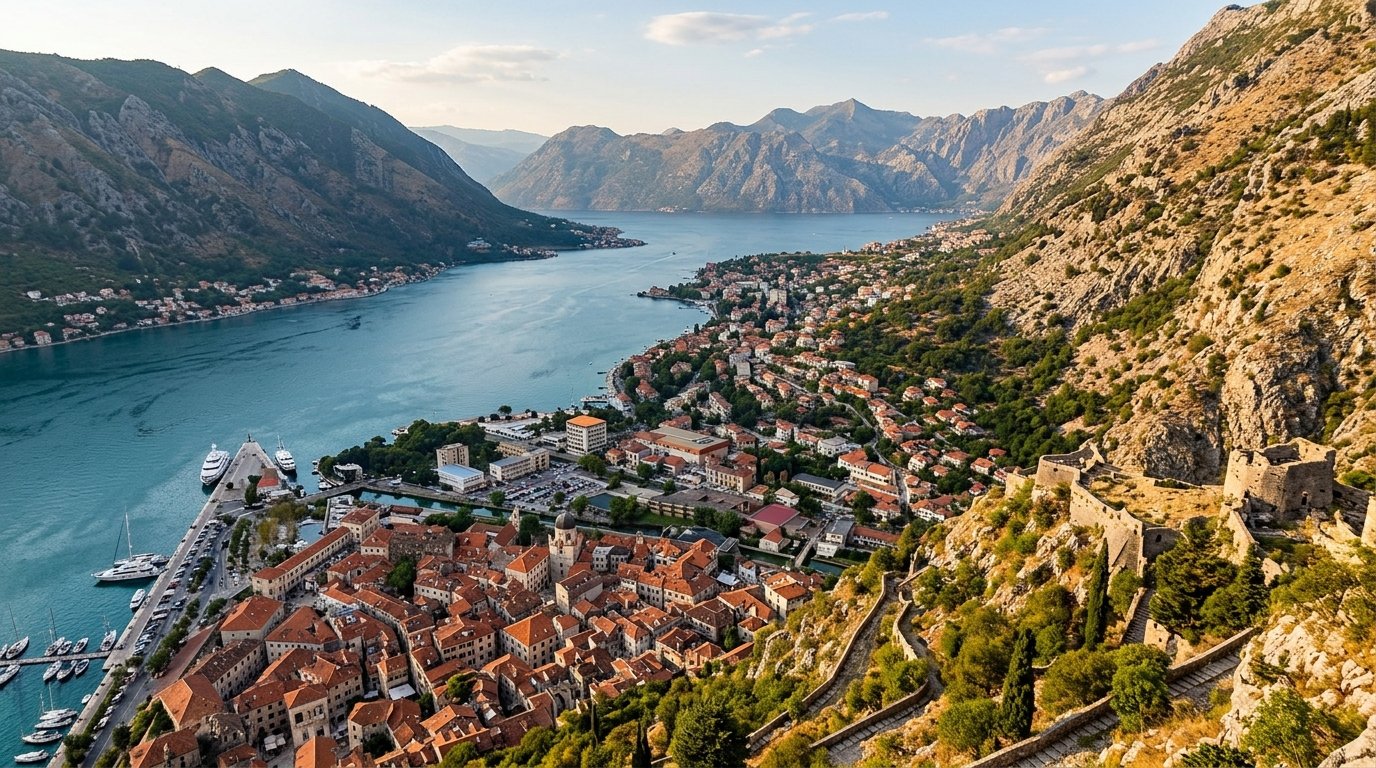
If you have ever seen a photo of a small medieval town tucked between deep blue water and steep grey mountains, you have probably seen Kotora Melnkalne, even if you did not know the name at first. It looks almost too beautiful to be real. Terracotta roofs glow in the afternoon sun, church bells ring over narrow stone lanes, and the bay below stays calm enough to mirror the cliffs above it.
This is not just another pretty place on the Adriatic coast. Kotora Melnkalne is Kotor, Montenegro, described in a name that carries the feeling of the place inside it. Once you understand the words, the town makes even more sense. And once you walk its old streets, climb its famous walls, and sit by the water with a slow coffee, you will understand why so many travelers call it one of the most memorable stops in southern Europe.
In this guide, we will look at what Kotora Melnkalne means, where it sits on the map, how it grew through centuries of history, what to see, what to eat, and how to plan a visit that feels relaxed instead of rushed.
What Is Kotora Melnkalne?
Kotora Melnkalne is the Latvian style name for Kotor, Montenegro. In Latvian, Kotora refers to Kotor, and Melnkalne refers to Montenegro. Put together, the phrase points to the same town and country that you will find on a modern map as Kotor, Montenegro.
The second word is the interesting part. Melnkalne comes from Latvian roots that mean black mountain. Melns means black, and kalns means mountain. That meaning is not a coincidence. The country itself is called Montenegro, which comes from the Venetian Italian Monte Negro, and it also means black mountain. In Montenegrin, the country is called Crna Gora, and that carries the same meaning.
So when you read Kotora Melnkalne, you can think of it as Kotor of the Black Mountain. It is a poetic and descriptive way to name the town, not a separate town or a different place on the map. Travelers, writers, and language lovers use it because it captures the setting so well. A medieval town sits at the foot of dark, steep limestone mountains, right at the edge of a quiet bay. The name tells you that story before you even arrive.
If you search for flights, hotels, or directions, look for Kotor. If you read Kotora Melnkalne in a travel article, know that it means the same place, with a little more romance in the wording.
Where Is Kotora Melnkalne Located?
Kotora Melnkalne sits in the southwest of Montenegro, on the Adriatic coast of southern Europe. The town stands at the innermost end of the Bay of Kotor, known locally as Boka Kotorska. This is one of the most sheltered and scenic bays in the region, and it is often compared to a fjord because of the way high mountains rise straight from the water.
The location is part of the magic. From the Old Town, you can look across the bay and see steep cliffs, small villages, church towers, and boats moving slowly across calm water. The town feels protected and peaceful, almost hidden, even though it is close to several well known places.
Tivat Airport is the closest airport, about 10 to 15 kilometres away, depending on your route. Podgorica Airport is farther inland and offers more connections. Dubrovnik Airport in Croatia is another useful option if you want to combine Montenegro with a trip along the Croatian coast. Nearby towns include Perast, Budva, Herceg Novi, and Dobrota, and each one is easy to reach by bus, car, or boat in the warmer months.
Kotora Melnkalne at a Glance
Here are the simple facts that help you plan with confidence.
Place: Kotor, Montenegro
Latvian name: Kotora (Melnkalne)
Location: Bay of Kotor, southwestern Montenegro
Region: Adriatic Coast, Southeastern Europe
Famous for: Historic Old Town, city walls, and the bay
UNESCO status: Natural and Culturo-Historical Region of Kotor, listed in 1979
Main landmark: St. Tryphon Cathedral
Nearest airport: Tivat Airport
Currency: Euro
Main language: Montenegrin
Best months: April to June, and September to October
Suggested stay: One to two days in Kotor, longer if you want to explore the bay
Top activity: A slow walk through the Old Town, followed by the climb to St. John Fortress
The town itself is compact. You can walk across the Old Town in a few minutes, yet you can spend hours there without feeling bored. Every lane seems to lead to a small square, a hidden church, a cafe, or a view you did not expect.
The History of Kotora Melnkalne
Kotor has a long and layered history, and you can still read that history in its buildings. The area was first settled in ancient times, and it later grew under Roman and Byzantine influence. Its position on a sheltered bay made it valuable for trade, sailing, and defence, so many powers wanted to control it.
The most important chapter began in 1420, when Kotor came under the rule of the Venetian Republic. Venice held the town for nearly four centuries, until 1797, and that period shaped almost everything you see today. The Venetians built strong walls, elegant palaces, churches, and squares. They also built a proud maritime tradition, and Kotor became known for its skilled sailors, shipbuilders, and merchants.
After Venice, the town passed through Austrian and later Yugoslav periods. It survived wars, earthquakes, and political change, and it kept its old character through it all. A major earthquake in 1979 caused serious damage, and in the same year UNESCO added the region to its World Heritage List. That recognition helped protect the Old Town and encouraged careful restoration.
When you walk through Kotor today, you are not just looking at old stones. You are walking through Illyrian roots, Roman order, Byzantine faith, Venetian wealth, and a modern Montenegrin town that still lives inside its walls. People live, work, eat, and celebrate here. It is a living town, not a museum.
Exploring the Old Town of Kotor
The Old Town is the heart of Kotora Melnkalne, and it is best explored on foot. Cars do not belong in these lanes, and that is part of the charm. The streets are paved with smooth stone, the buildings are close together, and the light changes beautifully as the sun moves across the mountains.
Start at the Sea Gate, the main entrance from the waterfront. This historic gate leads you into the Square of Arms, one of the largest open spaces in the Old Town. From here, you can wander in any direction and still find something worth seeing. Look up as you walk. Many buildings carry carved coats of arms, small balconies, and windows that show Venetian and Baroque details.
The lanes are narrow and sometimes confusing, and that is fine. Getting a little lost is part of the experience. You might find a quiet courtyard, a tiny church, a shop selling local crafts, or a cafe tucked into a corner where locals sit and talk. Take your time. Kotor rewards slow travel.
St. Tryphon Cathedral
St. Tryphon Cathedral is one of the most famous buildings in Kotora Melnkalne, and it is hard to miss. The cathedral dates from the 12th century and was consecrated in 1166. It is dedicated to St. Tryphon, the patron saint of Kotor, and it stands in a central square in the Old Town.
The building has a Romanesque core, with later Baroque additions made after earthquakes. Inside, you will find stone columns, religious art, and a sense of calm that contrasts with the busy lanes outside. Even if you are not religious, it is worth stepping inside to feel the history and to see how the town has cared for this place for more than 850 years.
The Church of St. Luke and Other Small Churches
Kotor is full of small churches, and many of them are easy to miss if you walk too fast. The Church of St. Luke dates from 1195 and is one of the oldest churches in the town. It is small and simple, yet it tells an important story about the religious life of the community.
Other churches, chapels, and monasteries are scattered through the Old Town and the surrounding hills. Each one has its own style, history, and view. If you enjoy quiet places, look for these smaller buildings. They often feel more personal than the larger landmarks.
Kotor City Walls and St. John Fortress
If you want the best view in Kotora Melnkalne, climb to St. John Fortress, also known as San Giovanni Fortress. The fortress sits high above the town, and the path to it follows the old city walls up the mountainside.
The climb involves about 1,350 stone steps, depending on the route you take. It is steep, and it takes effort, especially on a warm day. Wear good shoes, bring water, and go early in the morning or later in the afternoon when the light is softer and the heat is lower.
The reward is worth it. From the top, you can see the whole Old Town, the red roofs, the bay curving into the distance, and the mountains rising on both sides. It is one of those views that makes you stop and stay quiet for a moment. Many visitors say it is the highlight of their trip, and it is easy to understand why.
Along the way, you will pass the Church of Our Lady of Health, a small church halfway up the hill. It is a good place to rest, take photos, and enjoy a view that is already beautiful before you reach the top.
The Maritime Museum of Montenegro
To understand why Kotor became so important, visit the Maritime Museum of Montenegro. The museum stands in Grgurina Palace inside the Old Town, and it tells the story of the town as a seafaring community.
Inside, you will find model ships, maps, uniforms, photographs, and objects from centuries of trade and sailing. The exhibits show how Kotor connected Montenegro to Venice, to other Adriatic ports, and to the wider world. It is a good stop on a hot afternoon, and it gives context to the palaces and churches you see outside.
The Bay of Kotor and Nearby Villages
The Bay of Kotor is one of the biggest reasons to visit Kotora Melnkalne. The water is calm, the mountains are close, and the villages along the shore each have their own character.
Perast is one of the most beautiful villages on the bay. It is small, elegant, and full of old stone houses and churches. From Perast, you can take a short boat ride to Our Lady of the Rocks, a small island church built on a man made island. The island is one of the most photographed places in Montenegro, and the story behind it is just as interesting as the view.
Dobrota is another peaceful village close to Kotor. It has a long waterfront, old palaces, and a slower pace that many travelers love. Muo and Prcanj are also worth a short visit if you want to escape the crowds and see how local life looks along the bay.
If you have time, take a boat tour of the bay. It is a relaxing way to see the coastline, the cliffs, and the villages from the water. Many tours stop at Perast, Our Lady of the Rocks, and other scenic points.
Cats, Culture, and Daily Life in Kotor
One of the most charming details of Kotora Melnkalne is its cats. Cats are everywhere in the Old Town. They sleep in sunny squares, sit on stone steps, and wander through lanes without hurry. Locals care for them, and visitors love to photograph them. You will even find cat themed souvenirs in local shops.
Culture here is not just in museums. It lives in music, food, festivals, and daily habits. In summer, Kotor hosts cultural events, concerts, and festivals that bring the squares to life. The KotorArt festival, carnival celebrations, and local religious festivals all show different sides of the town.
Daily life is slower than in a big city. People meet for coffee, walk along the waterfront in the evening, and greet neighbours in the lanes. If you sit in a cafe and watch the town for an hour, you will learn more about Kotor than any guidebook can teach you.
Local Food to Try in Kotora Melnkalne
Food in Kotor brings together the sea and the mountains. The Adriatic gives fresh fish and seafood, while the inland hills provide cheese, cured meat, bread, and wine. The result is simple, fresh, and full of flavour.
Try grilled fish, calamari, and mussels, especially a dish called buzara, where shellfish are cooked in wine, garlic, and herbs. Black risotto, made with cuttlefish ink, is another local favourite. It looks unusual, but the taste is rich and satisfying.
For meat lovers, prsut, a Montenegrin cured ham similar to prosciutto, is a must try. It is often served with local cheese, olives, and bread. Njeguški cheese and kajmak, a creamy dairy product, are also common on local menus.
To drink, try Vranac, the most famous red wine in Montenegro. It is bold, dark, and full of character, just like the mountains that give the country its name. Local white wines and rakija, a fruit brandy, are also popular, but enjoy them slowly.
For dessert, look for fresh figs, local pastries, and ice cream in the Old Town. A sweet treat after a long walk, with a view of the bay, is a simple pleasure that fits Kotor perfectly.
Nature Around Kotora Melnkalne
The nature around Kotor is dramatic and beautiful. The Dinaric Alps frame the bay with limestone cliffs that rise to more than 1,700 metres in places. The mountains look dark in the morning light, which helps explain the name Black Mountain.
Hiking is one of the best ways to experience this landscape. The climb to St. John Fortress is the most famous hike, but there are other trails in the area, including routes toward Lovćen National Park. Lovćen is known for its mountain views, its mausoleum, and its winding road with views that stretch across the bay and the coast.
If you prefer water to mountains, swimming, kayaking, and boat trips are easy to arrange in summer. The bay is calm and clear, and the beaches near Kotor and Budva offer a different kind of relaxation after a day of walking and climbing.
When Is the Best Time to Visit Kotora Melnkalne?
Spring and autumn are the best times to visit for most travelers. April to June brings warm weather, green hills, and fewer crowds. September to October is also lovely, with warm days, clear light, and a calmer town after the summer peak.
Summer, from July to August, is hot and busy. Cruise ships bring many visitors, and the Old Town can feel crowded in the middle of the day. If you visit in summer, start early, take a break in the afternoon, and return in the evening when the light is golden and the streets feel more relaxed.
Winter is quiet and peaceful. Some restaurants and tours close or reduce hours, but the town has a different kind of beauty in the cooler months. The mountains look sharper, the bay feels more private, and you can enjoy Kotor without the crowds. If you like slow travel and local life, winter can be a good choice.
How to Get to Kotora Melnkalne
Getting to Kotor is simple, and the journey itself is part of the experience. The coastal road offers views of the bay, the mountains, and small villages along the way.
Tivat Airport is the closest, and a taxi or bus can bring you to Kotor in about 20 to 30 minutes, depending on traffic. Podgorica Airport is about two hours away by car or bus. Dubrovnik Airport in Croatia is also about two hours away, and the drive along the coast is scenic.
Buses connect Kotor to Budva, Herceg Novi, Podgorica, and other towns in Montenegro. If you rent a car, you will have more freedom to explore the bay and the mountains, but parking in the Old Town area can be limited. Many visitors park outside the walls and walk in.
Once you are in Kotor, you do not need a car. The Old Town is made for walking, and the waterfront is flat and easy to enjoy on foot.
Where to Stay in Kotora Melnkalne
Where you stay can change how you experience Kotor. Staying inside the Old Town puts you close to the squares, churches, and cafes, and it lets you enjoy the town early in the morning and late at night when day visitors have left. Rooms here are often in historic buildings, so they can be small and charming rather than large and modern.
Staying in Dobrota or Muo gives you a quieter base with views of the bay. These areas are close enough to walk or take a short taxi ride into the Old Town, and they often offer more space and calmer nights.
If you want a beach base, Budva is about 30 minutes away by car, and it offers more hotels and nightlife. Many travelers split their stay, with a few nights in Kotor for history and a few nights elsewhere for the beach.
Book early if you travel in summer, especially for rooms inside the Old Town. In spring and autumn, you will have more choice and often better prices.
A Simple One Day Plan for Kotora Melnkalne
If you have only one day, you can still see the best of Kotor without rushing too much.
Start in the morning at the Sea Gate and walk through the Old Town. Visit St. Tryphon Cathedral and the Square of Arms, then wander through the side lanes. Stop for coffee in a quiet square and watch the town wake up.
In the late morning, begin the climb to St. John Fortress. Take water, wear good shoes, and go at your own pace. Enjoy the view from the top and take plenty of photos.
Come down for a late lunch by the water. Try fresh seafood, a local salad, and a glass of Vranac wine. After lunch, visit the Maritime Museum or take a short boat trip to Perast and Our Lady of the Rocks.
In the evening, return to the Old Town for dinner. The lanes look different at night, with warm lights, music, and a relaxed atmosphere. End the day with a slow walk along the waterfront, where the mountains and the bay meet in the dark.
A Relaxed Two Day Plan
With two days, you can slow down and enjoy more of the bay.
On day one, follow the one day plan above, but take more time in the Old Town and the fortress climb. On day two, explore the bay by boat or car. Visit Perast, Dobrota, and a small village you have not seen yet. Stop for a long lunch, swim if the weather is warm, and enjoy the view from the water.
This slower pace lets you see Kotor as more than a day trip. You begin to notice the details, the cats, the church bells, the local shops, and the way the light changes on the mountains.
Practical Tips for Visiting Kotora Melnkalne
A few simple tips will make your visit smoother and more enjoyable.
The currency is the euro, and cards are widely accepted, but it is useful to carry some cash for small cafes, markets, and boat trips. The main language is Montenegrin, and English is widely spoken in tourist areas. A few local words, like hvala for thank you, will always be appreciated.
Wear comfortable shoes. The streets are stone, the fortress climb is steep, and you will walk more than you expect. Bring water, sunscreen, and a hat in summer. Respect churches and quiet places, and dress modestly when you enter a religious building.
Be kind to the cats, but do not feed them in restaurants. Support local shops and family run restaurants when you can. They are part of what makes Kotor special.
If you visit in summer, arrive early for the fortress climb and for popular sights. Cruise ship crowds usually arrive in the late morning, so the early hours are often the most peaceful.
Frequently Asked Questions About Kotora Melnkalne
Is Kotora Melnkalne the same as Kotor, Montenegro?
Yes. Kotora Melnkalne is a Latvian style name for Kotor, Montenegro. It refers to the same town, the same bay, and the same Old Town.
Is Kotora Melnkalne an official town name?
No. It is a poetic and descriptive phrase, not an official administrative name. On maps, signs, and travel bookings, you will see Kotor, Montenegro.
What does Melnkalne mean?
Melnkalne comes from Latvian words for black mountain. It reflects the meaning of Montenegro itself, which also means black mountain in Venetian Italian and in Montenegrin as Crna Gora.
How many steps are there to St. John Fortress?
There are about 1,350 stone steps to the fortress, depending on the route. The climb is steep, so take water and go slowly.
What is the best time to visit Kotora Melnkalne?
April to June and September to October offer the best balance of warm weather and fewer crowds. Summer is lively but busy, and winter is quiet and peaceful.
How long should I stay in Kotor?
One to two days is enough for the Old Town, the fortress, and a short bay trip. Stay longer if you want to explore Perast, Lovćen, Budva, and the wider coast at a relaxed pace.
Is Kotora Melnkalne good for families?
Yes, families enjoy the Old Town, the bay, and the boat trips. The fortress climb is best for older children and adults who are comfortable with steep steps and warm weather.
Explore more: Drums Timpani: History, Types, Sounds, and How They Work


