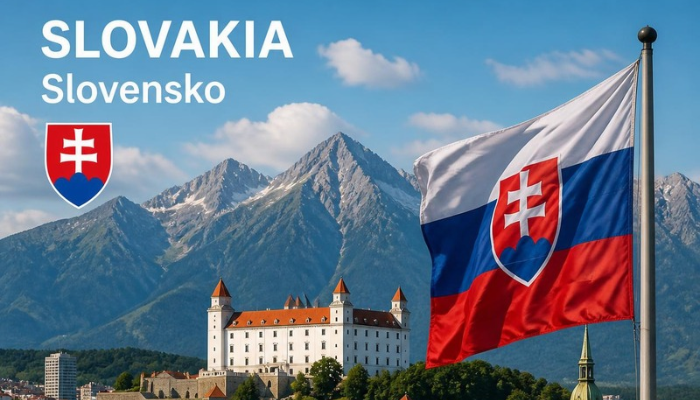
The phrase “en Slovakia” is not a standard English expression, but it commonly appears in searches and online content related to Slovakia. Depending on the context, someone using the phrase may be looking for information about Slovakia in English, traveling there, living there, or simply understanding the country.
Slovakia is a landlocked country in Central Europe with a population of about 5.42 million based on 2025 Eurostat figures. Its capital is Bratislava, its official language is Slovak, and its currency is the euro. Slovakia has been an EU member since 2004 and joined the Schengen Area in 2007.
Beyond the capital, Slovakia offers mountain landscapes, medieval towns, castles, caves, national parks, thermal attractions, traditional food, and a distinctive Central European culture. This guide explains the country from a practical English-language perspective.
What Does “En Slovakia” Mean?
The first thing to understand is that “en Slovakia” does not have one established definition in English.
It may be used online as a keyword variation for information about Slovakia. The phrase can appear in travel articles, country guides, language-related searches, and pages aimed at people who want information about Slovakia in English.
For practical purposes, readers searching for “en Slovakia” are likely looking for one or more of these topics:
- Slovakia as a country
- Travel to Slovakia
- Slovakia in English
- Slovak culture
- Slovak cities
- The Slovak language
- Living and working in Slovakia
- Places to visit
- Information for foreigners
This article treats the phrase as a broad entry point to understanding Slovakia rather than pretending that it has a special meaning in the English language.
Where Is Slovakia?
Slovakia is a landlocked country in Central Europe.
It shares borders with:
- Czechia
- Austria
- Poland
- Ukraine
- Hungary
Its location makes it part of a region where Central European cultures, languages, historical influences, and trade routes have overlapped for centuries.
The country covers approximately 49,035 square kilometers. Bratislava, the capital, is located in the southwestern part of the country near the Danube River and close to the Austrian and Hungarian borders.
Slovakia’s geography changes considerably across the country. Mountain areas dominate much of the north and center, while lower and flatter landscapes can be found in other regions.
Slovakia at a Glance
| Fact | Information |
|---|---|
| Country | Slovakia |
| Official name | Slovak Republic |
| Capital | Bratislava |
| Official language | Slovak |
| Currency | Euro (€) |
| Region | Central Europe |
| EU membership | Since 2004 |
| Schengen membership | Since 2007 |
| Euro adoption | 2009 |
| Population | About 5.42 million, 2025 figure |
| Area | About 49,035 km² |
The European Union identifies Slovak as Slovakia’s official EU language and confirms its membership of the euro area since 2009.
What Is Slovakia Known For?
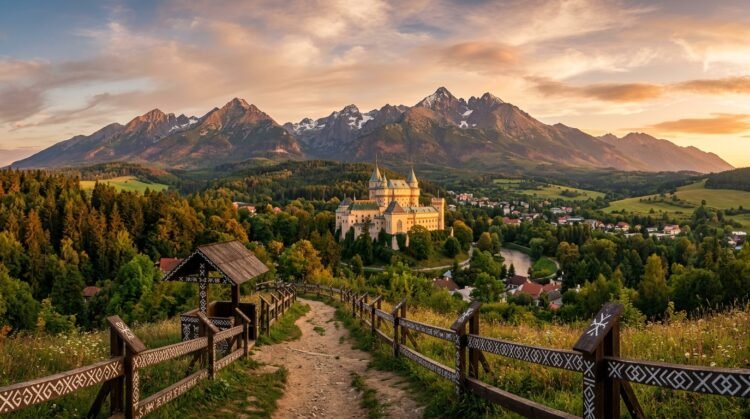
Slovakia is particularly associated with its mountains, castles, historic towns, folk traditions, caves, and outdoor recreation.
Its tourism identity is broader than Bratislava.
The country has several major natural and cultural attractions, including the High Tatras, Slovak Paradise, historic mining towns, wooden churches, medieval architecture, and numerous castles and manor houses. Slovakia’s official tourism portal highlights both its natural landscapes and extensive cultural heritage.
Some of the country’s most recognizable features include:
The High Tatras
The High Tatras are among Slovakia’s best-known mountain areas. They attract visitors interested in hiking, winter sports, mountain scenery, and outdoor recreation.
Castles
Slovakia has a large concentration of castles, castle ruins, chateaux, and manor houses. Official tourism information lists more than 100 castles and at least twice as many manor houses.
Historic Towns
Places such as Banská Štiavnica, Bardejov, Levoča, and other historic settlements preserve architecture connected to different periods of Slovak and Central European history.
Folk Culture
Traditional architecture, crafts, clothing, music, festivals, and regional food remain important parts of Slovakia’s cultural identity.
What Language Is Spoken in Slovakia?
The official language is Slovak.
Slovak belongs to the West Slavic language group and is closely related to Czech and, more distantly, to other Slavic languages.
For foreigners, learning basic Slovak can be useful for everyday life. The Slovak government has supported language education for foreigners, including programs aimed at helping adults develop Slovak-language skills.
Visitors do not necessarily need to speak Slovak for a short trip, particularly when traveling in tourist-oriented areas, but knowing simple words and phrases can make interactions easier.
Useful expressions include:
- Ahoj = Hello / Hi
- Dobrý deň = Good day
- Ďakujem = Thank you
- Prosím = Please / You’re welcome
- Áno = Yes
- Nie = No
English-language information is also available through Slovak government services for foreigners interested in areas such as business, study, and employment.
What Currency Does Slovakia Use?
Slovakia uses the euro (€).
The country adopted the euro on January 1, 2009, replacing the Slovak koruna.
This is useful for travelers moving between Slovakia and other euro-area countries because there is no need to exchange currency when traveling directly between countries that also use the euro.
For visitors from the United States, prices will normally be displayed in euros rather than U.S. dollars.
When budgeting for a trip, travelers should check current accommodation, transportation, attraction, restaurant, and exchange-rate information because prices can change.
Is Slovakia in the European Union and Schengen Area?
Yes.
Slovakia became a member of the European Union on May 1, 2004. It has been part of the Schengen Area since December 21, 2007 and joined the euro area in 2009.
However, EU, Schengen, and euro membership are different things.
- EU membership concerns political and economic integration within the European Union.
- Schengen membership concerns the common area of travel without routine internal border controls between participating countries.
- Euro-area membership means the country uses the euro as its currency.
Travelers should still check the entry requirements that apply to their nationality and circumstances before traveling.
Bratislava: Slovakia’s Capital
Bratislava is the capital and largest city of Slovakia.
The city sits on the Danube River in southwestern Slovakia. Its position near Austria and Hungary gives it an unusual geographic setting for a European capital.
The historic center contains narrow streets, squares, churches, palaces, museums, restaurants, and other historic buildings.
One of the city’s best-known landmarks is Bratislava Castle, which stands on a hill overlooking the Danube. The castle has a long history and has undergone several periods of construction and reconstruction.
The Old Town is another major area for visitors. Slovakia’s official tourism information describes the historic center as one of the main concentrations of historical sights and cultural institutions in the city.
Bratislava is also useful as a starting point for exploring western Slovakia and nearby Central European destinations.
Other Major Cities in Slovakia
Bratislava receives significant international attention, but Slovakia has several other cities worth understanding.
Košice
Košice is one of Slovakia’s largest cities and an important cultural and economic center in the eastern part of the country.
Its historic center includes important architecture and cultural landmarks.
Žilina
Žilina is located in northern Slovakia and provides access to several mountain areas. Its location makes it useful for travelers interested in northern Slovak landscapes.
Banská Bystrica
Banská Bystrica is a historic central Slovak city with connections to the country’s mining history and surrounding mountain regions.
Nitra
Nitra is one of Slovakia’s historically significant cities and is known for its castle and religious heritage.
Trenčín
Trenčín is particularly known for its castle, which overlooks the city and surrounding area.
Poprad
Poprad is an important gateway to the High Tatras and is therefore particularly relevant to travelers planning mountain activities.
The High Tatras and Slovakia’s Natural Landscapes
Slovakia’s mountains are one of the country’s defining geographical features.
The High Tatras offer a combination of alpine scenery, hiking opportunities, winter activities, mountain settlements, and access to outdoor attractions.
But the High Tatras are not the country’s only natural destination.
Slovakia also has national parks, caves, forests, valleys, rivers, thermal areas, and other mountain landscapes.
The official tourism portal highlights places such as Slovak Paradise, the Slovak Karst, and the Little Fatra Mountains.
Slovak Paradise
Slovak Paradise is known for gorges, waterfalls, ladders, trails, and other features that make hiking there different from conventional mountain walking.
The Slovak Karst
The Slovak Karst region is notable for its cave systems and karst landscapes.
Little Fatra
The Little Fatra Mountains provide another option for travelers interested in hiking, valleys, rock formations, and mountain scenery.
Castles and Historical Attractions
Slovakia’s historical landscape is unusually rich in fortified structures.
The country’s tourism authority lists more than 100 castles and at least twice as many manor houses.
Important examples include:
- Bratislava Castle
- Spiš Castle
- Bojnice Castle
- Orava Castle
- Trenčín Castle
- Devín Castle
- Červený Kameň Castle
- Strečno Castle
Spiš Castle
Spiš Castle is one of Slovakia’s most significant medieval landmarks. The castle and surrounding monuments form part of a UNESCO World Heritage property.
Bojnice Castle
Bojnice Castle is known for its distinctive appearance and is one of Slovakia’s prominent tourism attractions.
Orava Castle
Orava Castle sits above the Orava River and is one of the best-known historic attractions in northern Slovakia.
For travelers interested in European history, these sites offer more context than simply visiting modern city centers.
Slovak Culture and Traditions
Slovak culture reflects centuries of interaction among Central European communities and historical influences.
The country’s cultural heritage includes:
- Folk architecture
- Traditional music
- Regional costumes
- Woodcarving
- Religious architecture
- Medieval towns
- Traditional festivals
- Handicrafts
- Regional cuisine
Slovakia’s official tourism information describes a cultural landscape influenced by Celtic, Roman, Slavic, medieval, Renaissance, Baroque, and later historical periods.
This diversity is particularly visible outside major cities.
Villages and smaller historic towns can provide a different experience from Bratislava, especially for visitors interested in traditional architecture and regional customs.
Slovak Food and Drinks
Food is another useful way to understand Slovakia.
Traditional Slovak cuisine includes hearty dishes influenced by Central European culinary traditions.
Examples include:
- Bryndzové halušky
- Kapustnica
- Pirohy
- Lokše
- Various soups
- Potato-based dishes
- Regional cheeses
- Smoked and cured meats
Bryndzové halušky is one of the dishes most strongly associated with Slovak cuisine. It combines potato dumplings with bryndza, a traditional sheep’s-milk cheese.
Regional variations are common, so visitors should not assume that one dish represents the entire country.
Traveling Around Slovakia
Slovakia is relatively compact compared with many European countries, making it possible to combine several destinations during one trip.
Travelers can use different forms of transportation depending on the route:
- Trains
- Buses
- Local public transportation
- Rental cars
- Taxis and ride services where available
Bratislava can work as a base for exploring western Slovakia, while Poprad is particularly useful for visitors focusing on the High Tatras.
Travel plans should account for geography. A destination that looks close on a map may take longer to reach when mountains, regional transport connections, or transfers are involved.
For mountain destinations, visitors should also check weather and trail conditions before setting out.
When Is the Best Time to Visit Slovakia?
The best time depends on what you want to do.
Spring
Spring can be suitable for city sightseeing, cultural visits, and outdoor activities as conditions become milder.
Summer
Summer is useful for hiking, sightseeing, outdoor attractions, and exploring mountain regions.
Autumn
Autumn can be appealing for historic towns, city trips, landscapes, and changing seasonal scenery.
Winter
Winter is particularly relevant for visitors interested in snow, skiing, mountain destinations, and winter landscapes.
There is no single ideal season for every traveler. Someone planning a Bratislava city trip may have different priorities from someone planning a High Tatras hiking or skiing trip.
Slovakia for English-Speaking Visitors
English-speaking visitors can prepare for Slovakia without becoming fluent in Slovak.
A practical approach is to learn a few basic Slovak phrases, keep accommodation and transportation details accessible, and use English-language official information when planning.
Slovakia’s Central Government Portal provides English-language information for foreign users, including people interested in business, study, employment, residence-related matters, and other government services.
For longer stays, learning Slovak becomes more useful because everyday interactions outside international or tourist settings may rely more heavily on the local language.
Slovakia for Students, Workers, and Foreigners
Slovakia is not only a tourism destination.
Foreigners may visit or move to the country for:
- University study
- Employment
- Business
- Research
- Family reasons
- Long-term residence
The Slovak government maintains English-language information for foreign users, while the European Employment Services network provides information about living and working conditions in Slovakia.
For students, Slovakia’s Ministry of Education provides information about studying in Slovakia, including higher education, scholarships, study programs, and information for international students.
People planning a move should distinguish between tourism requirements and residence or employment requirements. Immigration rules can depend on nationality, purpose of stay, and length of residence.
Practical Things to Know Before Visiting Slovakia
A little preparation can make a trip easier.
Check entry requirements
Visa and entry requirements depend on nationality and the purpose and length of the visit.
Use euros
Slovakia uses the euro, so travelers should plan their spending accordingly.
Learn basic Slovak
English can be useful, but a few Slovak expressions are helpful and show cultural awareness.
Plan mountain trips carefully
Weather can change in mountain regions. Hiking plans should take terrain, weather, daylight, and trail conditions into account.
Explore beyond Bratislava
Bratislava is an important part of the country, but Slovakia’s castles, mountains, caves, historic towns, and smaller communities provide much more context.
Check official information
Travel requirements, border rules, transportation schedules, opening hours, and prices can change. Use current official sources when making specific travel arrangements.
Why Slovakia Can Be Interesting to First-Time Visitors
Slovakia combines several types of travel experience within a relatively small country.
A visitor can experience a historic capital, walk through medieval streets, visit castles, explore mountain trails, see caves, try regional food, and visit traditional villages without crossing multiple national borders.
Its geography also creates a useful contrast.
The capital has an urban Central European character, while the northern and central parts of the country provide access to mountains and rural landscapes.
For travelers interested in history, the combination of castles, mining towns, religious buildings, folk architecture, and historic centers provides another major attraction. Slovakia’s tourism authority emphasizes this mixture of natural and cultural heritage throughout the country.
A Simple Slovakia Travel Framework
If you are planning your first trip, you can organize your research around four categories.
1. Choose a city
Start with Bratislava, Košice, Žilina, Banská Bystrica, or another destination that fits your interests.
2. Add nature
Consider the High Tatras, Slovak Paradise, Little Fatra, or another national park or mountain region.
3. Add history
Choose a castle, historic town, museum, or UNESCO-related site.
4. Try local culture
Explore Slovak food, traditional architecture, local events, and regional customs.
This approach avoids spending an entire trip in one type of environment.
Final Takeaway
If you searched for “en Slovakia,” the most useful interpretation is information about Slovakia presented in English.
Slovakia is a Central European country with Bratislava as its capital, Slovak as its official language, and the euro as its currency. It is an EU and Schengen member and offers a combination of historic cities, castles, mountain landscapes, national parks, caves, traditional culture, and regional cuisine.
For a first visit, it makes sense to look beyond Bratislava. The High Tatras, historic towns, castles, and natural areas show a broader side of the country and help explain why Slovakia has a distinct cultural and geographic identity.
See also: Premiekalkulator V75