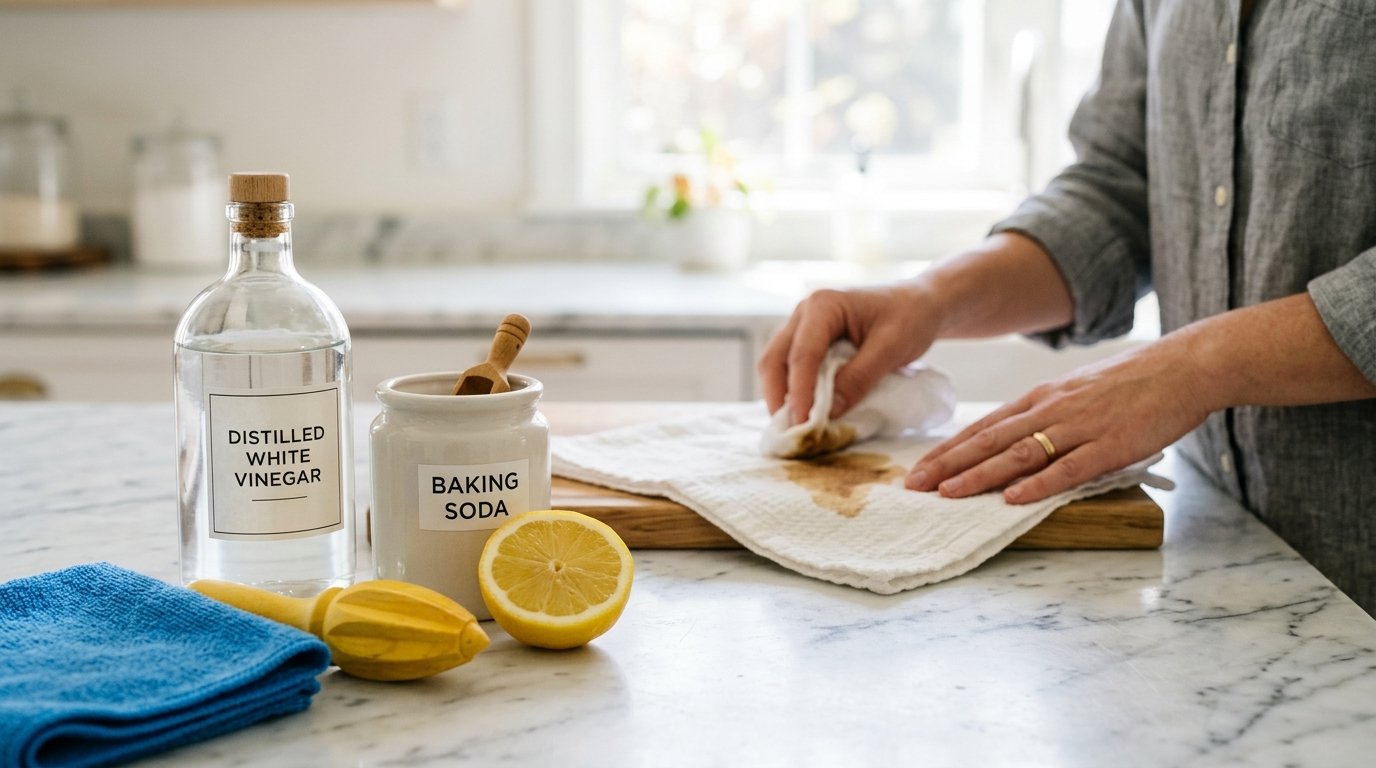
A stubborn stain does not always mean a garment is ruined. The key is to identify what caused the stain, act before it sets, and use a treatment that is suitable for both the stain and the fabric. Oil, coffee, wine, blood, ink, makeup, rust, grass, and old food stains all behave differently, so using the same remedy for every stain can make the problem worse.
This guide explains how to remove difficult stains from washable clothing and fabrics, how to treat older marks, what mistakes to avoid, and when a commercial stain remover or professional cleaner is the safer choice.
Why Are Some Stains So Difficult to Remove?
Stains are difficult because different substances interact with fabric fibers in different ways.
Oil and grease, for example, do not behave like water-based food stains. Protein-based stains such as blood require a different approach from colored stains such as wine or coffee. Some pigments can also become harder to remove after exposure to heat.
The fabric itself matters too. Cotton can tolerate treatments that may be unsuitable for wool, silk, or other delicate materials.
That is why there is no single stain-removal method that works safely for every garment.
The basic principle is simple:
Identify the stain, check the fabric-care label, treat the stain appropriately, and avoid heat until you know the stain has been removed.
What Should You Do Immediately After a Stain Happens?
The sooner you treat a stain, the better your chances of removing it.
Start by removing any solid material from the surface. Use the edge of a spoon or another dull tool rather than scraping aggressively.
For a liquid stain, gently blot the area with a clean cloth or paper towel. Do not automatically rub the stain because rubbing can spread the substance into a larger area.
Next, check the garment’s care label. It can tell you whether the item can be machine washed, hand washed, bleached, or dry cleaned.
If you plan to use a stain remover, test it on a hidden area first, particularly on colored clothing.
A simple first-response routine is:
- Remove excess material.
- Blot liquid stains.
- Avoid aggressive rubbing.
- Check the fabric-care instructions.
- Choose a treatment suitable for the stain.
- Pre-treat when necessary.
- Wash according to the garment instructions.
- Inspect the stain before drying.
How Do You Identify the Type of Stain?
Identifying the stain is one of the most important steps.
Oily or greasy stains
Examples include:
- Cooking oil
- Butter
- Salad dressing
- Grease
- Fatty sauces
These stains generally require a detergent or stain-treatment product capable of dealing with oily soil.
Protein-based stains
Examples include:
- Blood
- Milk
- Egg
- Some bodily fluids
These stains require different treatment from oil or pigment-based stains.
Colored food and beverage stains
Examples include:
- Coffee
- Tea
- Red wine
- Tomato sauce
- Fruit
These may leave visible pigments even after much of the original substance has been removed.
Pigment and cosmetic stains
Examples include:
- Ink
- Lipstick
- Foundation
- Mascara
- Some dyes
These can be especially challenging because they may contain both oils and strong colorants.
If you do not know what caused the stain, begin with the least aggressive suitable method rather than immediately using a powerful chemical.
How to Remove Oil and Grease Stains
Oil stains are among the most frustrating laundry stains because water alone does not remove oily substances effectively.
First, gently blot away excess oil. If the stain is fresh, avoid spreading it across the surrounding fabric.
Apply a small amount of liquid laundry detergent or a product specifically designed for grease and oily stains. Allow the product to work according to its label instructions.
Then wash the garment using the hottest temperature that is safe for that fabric.
Do not place the garment in the dryer while the stain is still visible. Inspect it first.
For older grease stains, more than one treatment may be necessary.
What not to do
Do not aggressively scrub a delicate fabric. Also avoid using random household solvents simply because they are known to dissolve grease. A product that removes grease may also damage dyes, finishes, or fibers.
How to Remove Coffee and Tea Stains
Coffee and tea can leave noticeable brown stains, particularly on light-colored fabrics.
Start by blotting fresh liquid rather than rubbing it into the fibers.
Rinse or pre-treat the stain according to the fabric-care instructions and the directions for your chosen stain-removal product.
For an older stain, pre-treatment may need to be repeated before washing.
Always inspect the garment after washing. If the mark remains, treat it again before using a dryer.
How to Remove Red Wine Stains
Red wine contains pigments that can leave a strong mark on fabric.
If the spill is fresh, absorb as much liquid as possible by gently blotting.
Avoid vigorous rubbing because it can spread the stain.
Next, use a fabric-safe stain treatment appropriate for the garment. Follow the product instructions and then wash according to the care label.
Do not assume that every popular kitchen remedy is safe for every fabric. Household ingredients can behave differently depending on the material, dye, and condition of the garment.
How to Remove Chocolate and Food Stains
First remove excess chocolate or food from the surface.
If the material is solid, use a dull edge to lift it without pushing it deeper into the fibers.
Pre-treat the remaining stain with a suitable laundry detergent or stain remover. Let the treatment work according to the product instructions and then wash the garment using the recommended settings.
For older food stains, repeat the treatment if necessary.
How to Remove Blood Stains
Blood stains should be treated carefully.
For washable fabrics, cold water is generally preferred for fresh blood rather than immediately using hot water.
Rinse or pre-treat the stain according to the fabric and product instructions. An enzyme-containing laundry product may be useful for protein-based stains when the product is suitable for the fabric.
After treatment, wash the garment according to its care label.
Never assume that more heat or more chemical product will produce better results.
How to Remove Ink Stains
Ink stains can be particularly difficult because different inks have different formulations.
Begin by identifying the type of ink if possible.
Avoid spreading the stain by rubbing aggressively. Use a treatment specifically recommended for the type of ink and fabric, and test it on an inconspicuous area first.
After treatment, wash according to the garment-care instructions.
If the ink has spread significantly or the garment is valuable or delicate, professional cleaning may be safer than experimenting with strong household chemicals.
How to Remove Makeup and Lipstick Stains
Makeup stains can contain oils, pigments, waxes, and other ingredients, which is why they may require more than ordinary washing.
Remove excess makeup without spreading it.
Apply a suitable stain remover or liquid laundry detergent according to the product instructions.
For colored or delicate clothing, test the treatment on a hidden section first.
After washing, check the area before drying.
How to Remove Sweat and Deodorant Stains
Sweat and deodorant can create yellow, gray, or white buildup over time.
The correct treatment depends on the fabric and the cause of the discoloration.
Start with a suitable laundry detergent or stain treatment and wash according to the garment’s care instructions.
For persistent discoloration, a laundry product designed for that type of buildup may be more appropriate than repeatedly applying household acids or abrasive powders.
Avoid aggressive scrubbing because it can weaken or roughen fabric fibers.
How to Remove Grass and Mud Stains
For mud, allow excess material to dry if necessary, then brush or scrape away loose soil carefully.
Once the solid material has been removed, pre-treat the remaining stain with an appropriate laundry product.
Grass stains may respond to detergent or a stain remover designed for organic stains, depending on the fabric.
Wash according to the care label and inspect the garment before drying.
How to Remove Rust Stains
Rust stains require special attention because ordinary laundry detergent may not remove them effectively.
Do not automatically reach for chlorine bleach. It can make certain rust discoloration problems worse.
Instead, use a rust-removal product specifically intended for fabrics and follow its instructions carefully.
Because rust treatments can be chemically different from ordinary laundry products, never mix products together.
If the garment is delicate, expensive, or labeled dry clean only, professional advice is preferable.
How to Remove Old and Set-In Stains
Old stains are usually more difficult than fresh stains because the material may have had more time to penetrate or bond with the fibers.
That does not mean every old stain is permanent.
Try this process:
- Identify the stain if possible.
- Check the fabric-care label.
- Apply an appropriate pre-treatment.
- Allow it to work for the recommended period.
- Wash according to the care instructions.
- Inspect the garment before drying.
- Repeat the treatment if appropriate.
Some set-in stains may require several treatments, while others may not be completely removable.
Do not keep increasing the amount of stain remover in the hope of getting faster results. More product is not automatically more effective.
How Does Fabric Type Change Stain Removal?
The same stain can require different treatment depending on the fabric.
Cotton
Cotton is generally easier to clean than many delicate fibers, but the garment’s dye and finish still matter.
Polyester and synthetic fabrics
Synthetic fabrics can hold oily soils differently from natural fibers. Follow the garment’s care instructions and choose a detergent or stain treatment suitable for the material.
Wool
Wool requires more cautious treatment. Avoid aggressive scrubbing, unsuitable bleach, and excessive heat.
Silk
Silk is delicate and can be damaged by unsuitable chemicals, friction, or heat. If the care label requires professional cleaning, follow it.
Spandex and stretch fabrics
Some bleaching products and harsh treatments can damage elastic fibers. Always check the label before using bleach or strong stain treatments.
The safest rule is simple:
The more delicate the fabric, the more important the care label becomes.
Should You Use Bleach on Difficult Stains?
Sometimes bleach can be useful, but it is not a universal stain remover.
Chlorine bleach is powerful and is unsuitable for some fabrics, including wool and silk. It can also cause permanent color loss when used incorrectly.
Oxygen-based bleach products are different and may be suitable for a wider range of washable fabrics, depending on the product and garment.
Always read both the garment-care label and the product instructions.
Never pour undiluted chlorine bleach directly onto clothing unless the product directions specifically allow it.
What About Baking Soda, Vinegar, Lemon, and Other Home Remedies?
Home remedies are popular because many people already have ingredients such as baking soda, vinegar, salt, or lemon at home.
However, “natural” does not automatically mean “safe for every fabric.”
A remedy that works on a sturdy washable cotton item may be unsuitable for dyed, delicate, coated, or specialty fabrics.
The safest approach is to:
- Identify the stain first.
- Check the fabric.
- Test any treatment on an inconspicuous area.
- Use mild methods before aggressive ones.
- Never mix cleaning chemicals.
If a commercial product has specific instructions for the stain and fabric, those instructions are generally more reliable than applying an improvised mixture.
Common Stain-Removal Mistakes to Avoid
1. Waiting too long
Fresh stains are generally easier to treat than old ones.
2. Rubbing aggressively
Hard rubbing can spread a stain and damage fibers.
3. Using heat too soon
A dryer can make a remaining stain harder to remove.
4. Ignoring the care label
The garment label exists to tell you how the material should be washed and treated.
5. Using too much product
More stain remover does not necessarily mean better stain removal.
6. Mixing cleaning products
Never mix stain removers with bleach, ammonia, or other household cleaners unless the manufacturer explicitly states that the combination is safe.
7. Using one remedy for every stain
Oil, blood, rust, ink, and wine are chemically different problems.
8. Treating delicate fabrics like ordinary cotton
Wool, silk and other delicate materials may require completely different handling.
When Should You Use a Commercial Stain Remover?
A commercial stain remover can be useful when:
- The stain is old.
- Ordinary detergent has not worked.
- The product is designed for the specific type of stain.
- The garment is washable.
- The product is compatible with the fabric.
Read the label carefully.
Look for information about:
- Suitable fabrics
- Suitable colors
- Types of stains
- Required contact time
- Washing instructions
- Safety precautions
Do not assume a product designed for clothing is automatically suitable for carpets, upholstery, leather, or other surfaces.
When Should You Use Professional Dry Cleaning?
Professional cleaning is the safer option when:
- The care label says “dry clean only.”
- The garment is made from a delicate or expensive material.
- The stain is extensive.
- The garment has a special finish.
- You are unsure which chemical treatment is safe.
- A previous stain-removal attempt has changed the fabric or color.
Do not experiment aggressively on an expensive garment simply because a home remedy worked on another piece of clothing.
A Simple Stain-Removal Decision Guide
| Stain Type | First Approach | Important Caution |
|---|---|---|
| Oil or grease | Liquid detergent or suitable stain remover | Avoid spreading the oil |
| Coffee | Blot and pre-treat | Inspect before drying |
| Tea | Blot and pre-treat | Check fabric compatibility |
| Red wine | Blot and use fabric-safe treatment | Avoid aggressive rubbing |
| Chocolate | Remove excess, then pre-treat | Treat before drying |
| Blood | Use cold-water treatment where appropriate | Avoid immediately applying heat |
| Ink | Use a suitable ink treatment | Test hidden area first |
| Makeup | Pre-treat with suitable detergent/stain remover | Makeup may contain oils and pigments |
| Grass | Remove soil and pre-treat | Follow fabric instructions |
| Rust | Use a fabric-safe rust remover | Avoid chlorine bleach |
| Old stains | Repeat suitable pre-treatment | Some set-in stains may remain |
How Can You Prevent Difficult Stains?
The easiest stain to remove is one that never becomes deeply embedded.
A few habits can help:
- Treat spills promptly.
- Keep a suitable stain remover available.
- Check garment labels before washing.
- Separate heavily soiled clothing.
- Avoid putting stained clothing directly into the dryer.
- Test unfamiliar products on hidden areas.
- Follow product dosage instructions.
- Keep cleaning products safely stored.
A consistent laundry routine can prevent many small stains from becoming permanent problems.
Frequently Asked Questions
What is the best way to remove a difficult stain?
There is no single method for every stain. Identify the substance, check the fabric-care label, pre-treat with an appropriate product, wash correctly, and inspect the garment before drying.
Can old stains still be removed?
Sometimes. Older stains are generally harder to remove and may require repeated treatment. Some set-in stains may not be completely removable.
Should I use hot or cold water for stains?
It depends on the stain and fabric. Cold water is often appropriate for certain fresh stains, while some heavily soiled garments can benefit from warmer water if the fabric allows it. Always follow the garment and product instructions.
Can I put a stained garment in the dryer?
It is better to check that the stain has disappeared first. Dryer heat can make some remaining stains more difficult to remove.
Is baking soda safe for all clothes?
No. Baking soda is not automatically suitable for every fabric or dye. Test treatments carefully and follow the garment-care instructions.
Can vinegar remove difficult stains?
Vinegar is sometimes used as a household cleaning ingredient, but it is not a universal stain remover. Its suitability depends on the stain, fabric, dye, and other products already being used.
Can bleach remove every stain?
No. Bleach is not suitable for every fabric or stain. Chlorine bleach can damage certain fibers and colors, and rust stains require particular caution.
How do I remove a stain without damaging the fabric?
Start with the mildest suitable method, test the treatment in an inconspicuous area, avoid aggressive rubbing, and follow the garment-care label.
What should I do if I don’t know what caused the stain?
Start conservatively. Identify the color, texture, and location of the stain, check the fabric label, and use a mild treatment designed for washable clothing. Avoid immediately applying strong chemicals.
When should I take a stained garment to a dry cleaner?
Use professional cleaning when the label says dry clean only, the fabric is delicate or valuable, or you are uncertain whether a treatment could damage the garment.
Final Takeaway
Learning come rimuovere macchie difficili is less about finding one magical household remedy and more about using the right process.
Treat stains as early as possible, identify the substance when you can, check the fabric-care label, choose a suitable treatment, and avoid drying the garment until you know the stain is gone.
For ordinary washable fabrics, careful pre-treatment and correct laundering can solve many difficult stains. For delicate, expensive, or dry-clean-only garments, professional cleaning is often the safer choice.
See also: North Carolina Business Entity Search