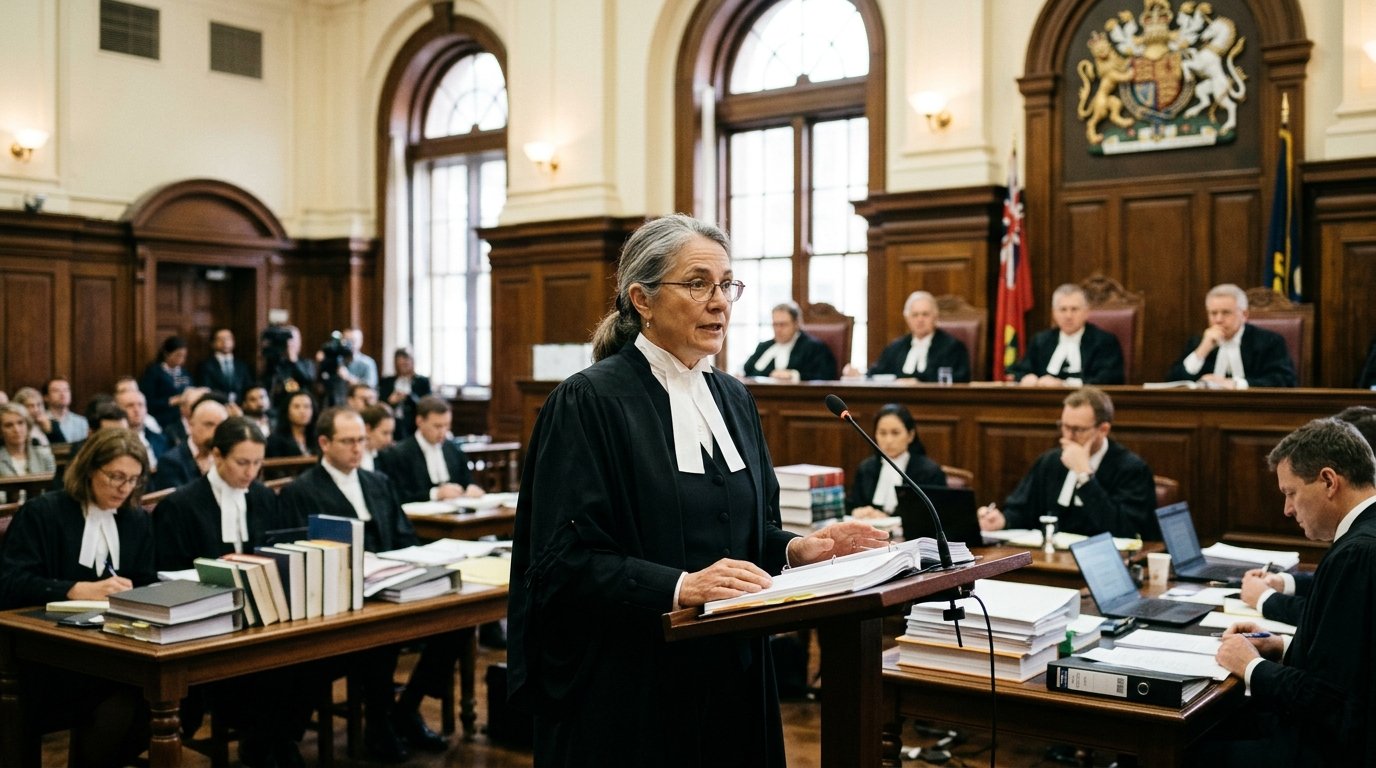
Mahadhivakta is the Hindi term for Advocate General, the highest-ranking constitutional law officer of an Indian state. The Advocate General provides legal advice to the state government, performs legal duties assigned by the Governor, and carries out responsibilities established by the Indian Constitution and applicable laws.
The position is established under Article 165 of the Constitution of India. Every state has provision for an Advocate General who serves as its principal legal adviser.
The office plays an important role in maintaining the legal and constitutional position of state governments. It helps government authorities understand legal requirements, address constitutional questions, and handle important legal matters.
In simple terms, the Mahadhivakta is the senior legal officer who advises a state government on matters of law.
Mahadhivakta Meaning in English
The word Mahadhivakta comes from the Hindi language.
It can be understood through two parts:
-
Maha: Great, senior, or chief.
-
Adhivakta: Advocate or lawyer.
Together, Mahadhivakta refers to a senior or chief advocate.
In the Indian constitutional system, its official English equivalent is Advocate General.
The Advocate General should not be confused with an ordinary government lawyer. This position has constitutional recognition and specific responsibilities under the Constitution.
Constitutional Position of Mahadhivakta Under Article 165
Article 165 of the Indian Constitution establishes the office of Advocate General for each state.
It explains three important aspects of the position:
-
Appointment of the Advocate General by the Governor.
-
Legal responsibilities and duties of the office.
-
Tenure and remuneration of the Advocate General.
Under Article 165(1), the Governor of each state appoints a person who is qualified to be appointed as a judge of a High Court.
Article 165(2) explains that the Advocate General must provide legal advice to the state government on matters referred by the Governor and perform other legal duties assigned to the office.
Article 165(3) states that the Advocate General holds office during the pleasure of the Governor and receives remuneration determined by the Governor.
These provisions establish the constitutional foundation of the position.
Who Appoints the Mahadhivakta?
The Governor of the state appoints the Mahadhivakta under Article 165 of the Indian Constitution.
The appointment is made at the state level, not by the President of India.
The person selected must meet the constitutional qualifications required for appointment as a High Court judge.
For example, if a state requires a new Advocate General, the Governor appoints a legally qualified person to occupy the constitutional office.
The Advocate General then performs legal responsibilities for that particular state government.
It is important to understand that the appointment authority is the Governor, while the office serves the legal needs of the state government.
Qualifications Required to Become a Mahadhivakta
A person cannot become an Advocate General simply by having a general law degree or working as an ordinary lawyer.
Article 165 requires the individual to be qualified for appointment as a High Court judge.
The relevant qualifications are explained under Article 217(2) of the Indian Constitution.
A person must be a citizen of India and satisfy at least one of the following professional experience requirements:
-
Have held a judicial office in India for at least ten years.
-
Have been an advocate of a High Court, or of two or more such courts in succession, for at least ten years.
These requirements establish the professional and legal experience expected of someone occupying the position.
The constitutional qualification is important because the Advocate General may deal with complicated legal questions involving government powers, constitutional provisions, public administration, and litigation.
Powers and Duties of Mahadhivakta
The Advocate General performs several important legal responsibilities.
The exact work may depend on the legal matters referred to the office, applicable laws, and responsibilities assigned by the Governor.
The main duties include the following.
1. Providing Legal Advice to the State Government
One of the primary responsibilities of the Advocate General is advising the state government on legal matters.
Government departments regularly face questions involving constitutional provisions, administrative decisions, public policies, contracts, regulations, and litigation.
The Advocate General helps the government understand the legal implications of these matters.
For example, if a state government is considering a policy that raises a constitutional question, the Advocate General may be asked to provide a legal opinion.
2. Performing Legal Duties Assigned by the Governor
Article 165 gives the Governor authority to refer legal matters and assign other legal responsibilities to the Advocate General.
These responsibilities may involve reviewing legal issues, examining government decisions, and providing advice on matters requiring constitutional interpretation.
The duties depend on the nature of the assignment and the applicable legal framework.
3. Performing Functions Under the Constitution
The Advocate General must also carry out functions assigned by the Indian Constitution or other applicable laws.
This means the office is not limited to providing general legal opinions.
It may also have responsibilities under other constitutional provisions and legal rules.
4. Assisting the State Government in Legal Matters
The Advocate General plays an important role in helping the state government understand and address legal disputes.
Depending on the matter and the applicable arrangements, the Advocate General may represent or advise the government in legal proceedings.
The office can help the government assess legal arguments, understand court proceedings, and respond to constitutional challenges.
5. Participating in Legislative Proceedings
The Advocate General has a specific constitutional right to participate in the proceedings of the state legislature.
This right comes from Article 177 of the Indian Constitution.
The Advocate General can speak and participate in legislative proceedings but does not receive voting rights merely because of this constitutional position.
This distinction is important because the Advocate General is a legal officer, not an elected legislator by virtue of holding the office.
Role of Mahadhivakta in the State Legislature
Article 177 explains the participation rights of the Advocate General in state legislative proceedings.
The Advocate General has the right to:
-
Speak in the State Legislative Assembly.
-
Participate in discussions.
-
Participate in the proceedings of the Legislative Council where the state has one.
-
Participate in committees of the state legislature when named as a member.
However, the Advocate General cannot vote under Article 177 merely by holding this constitutional office.
This arrangement allows the legislature to receive legal explanations and constitutional guidance from its senior law officer.
For example, if a proposed state law raises a complicated constitutional question, the Advocate General may participate in the relevant proceedings and explain the legal position.
The right to participate does not make the Advocate General an elected member of the legislature.
Tenure of the Mahadhivakta
The Constitution does not prescribe a fixed term for the Advocate General.
Under Article 165(3), the Advocate General holds office during the pleasure of the Governor.
This means the office does not operate under a constitutionally guaranteed five-year or other fixed tenure.
The Advocate General may also resign from the position.
The duration of service therefore depends on the constitutional arrangement and the circumstances surrounding the appointment.
This is different from certain other constitutional offices that have specifically prescribed terms.
Salary and Remuneration of Mahadhivakta
The Constitution does not establish one uniform national salary for every state Advocate General.
Under Article 165(3), the remuneration of the Advocate General is determined by the Governor.
Consequently, the payment arrangements may differ between states.
The office is a senior constitutional legal position, and its remuneration is determined according to the relevant state-level arrangements.
Anyone researching the salary of a particular Advocate General should check the applicable state government notification or official information.
Difference Between Attorney General and Advocate General
The Attorney General and Advocate General are both senior constitutional legal officers in India. However, they work at different levels of government.
The Attorney General serves the Union Government, while the Advocate General serves a state government.
| Basis | Attorney General | Advocate General |
|---|---|---|
| Constitutional Article | Article 76 | Article 165 |
| Government level | Central Government | State Government |
| Appointing authority | President | Governor |
| Main responsibility | Legal advice to Union Government | Legal advice to State Government |
| Constitutional qualification | Qualified to be appointed a Supreme Court judge | Qualified to be appointed a High Court judge |
| Legislative participation | Article 88 | Article 177 |
| Voting rights through office | No | No |
| Tenure | Pleasure of the President | Pleasure of the Governor |
Both offices provide constitutional legal support to their respective governments.
The most important difference is their jurisdiction and the level of government they serve.
Why Is Mahadhivakta Important in the Indian Legal System?
The Advocate General helps maintain the legal and constitutional integrity of state administration.
State governments make decisions that affect public services, education, infrastructure, taxation, public safety, and other areas of governance.
Many of these decisions involve complicated legal questions.
The Advocate General helps the government understand its legal responsibilities and avoid decisions that may conflict with constitutional or statutory requirements.
The importance of the office can be understood through several areas.
Constitutional guidance: The Advocate General helps the state government interpret constitutional provisions and understand its legal powers.
Legal decision-making: The office provides legal opinions that can help government departments make informed decisions.
Government litigation: The Advocate General may assist in significant legal disputes involving the state government.
Legislative participation: The office provides a channel for legal expertise during state legislative proceedings.
Legal accountability: The position supports lawful government action by highlighting relevant legal obligations and constitutional limitations.
Mahadhivakta and Other Government Law Officers
It is useful to distinguish the Advocate General from other legal professionals working for the government.
Advocate General: A constitutional law officer appointed under Article 165 to advise the state government and perform assigned legal duties.
Additional Advocate General: A state-level legal officer whose appointment and responsibilities depend on the applicable state arrangements. This is not a separate constitutional office established by Article 165.
Government Advocate: A lawyer who represents or advises government departments in legal proceedings according to the relevant appointment and service arrangements.
Public Prosecutor: A lawyer responsible for conducting criminal prosecutions under the applicable criminal procedure framework.
These positions may work together, but their constitutional status, appointment arrangements, and responsibilities are not identical.
Common Misunderstandings About Mahadhivakta
Several misunderstandings exist about the role of the Advocate General.
Is the Mahadhivakta a Judge?
No. The Advocate General is a constitutional law officer, not a judge.
Although the person must satisfy the qualifications required for appointment as a High Court judge, holding the Advocate General’s office does not make that person a judicial officer.
Does the Mahadhivakta Have Voting Rights?
No. Article 177 provides the right to speak and participate in legislative proceedings without granting a voting right through the office.
Is the Mahadhivakta Appointed by the President?
No. The Governor of the relevant state makes the appointment under Article 165.
Does Every State Have Its Own Advocate General?
Yes. Article 165 provides for an Advocate General for each state.
Does the Mahadhivakta Have a Fixed Five-Year Term?
No. Article 165 does not establish a fixed five-year tenure. The Advocate General holds office during the pleasure of the Governor.
Understanding these distinctions makes it easier to understand the constitutional position and responsibilities of the office.
12. Frequently Asked Questions About Mahadhivakta
1. What is the meaning of Mahadhivakta?
Mahadhivakta means Advocate General in English. It refers to the highest constitutional law officer of an Indian state who advises the state government on legal matters.
2. Which article of the Indian Constitution deals with Mahadhivakta?
Article 165 of the Indian Constitution establishes the office of Advocate General for a state. It explains appointment, legal responsibilities, tenure, and remuneration.
3. Who appoints the Advocate General of a state?
The Governor of the respective state appoints the Advocate General. The appointed person must be qualified to become a High Court judge.
4. What are the main duties of Mahadhivakta?
The main duties include providing legal advice to the state government, performing legal responsibilities assigned by the Governor, and carrying out functions established under the Constitution and applicable laws.
5. Can the Mahadhivakta participate in the State Legislative Assembly?
Yes. Under Article 177, the Advocate General can speak and participate in proceedings of the State Legislature. However, the office does not provide voting rights.
6. What is the tenure of the Advocate General?
The Advocate General does not have a fixed constitutional term. Under Article 165(3), the person holds office during the pleasure of the Governor.
7. What is the difference between Attorney General and Advocate General?
The Attorney General is the highest law officer of the Union Government under Article 76, while the Advocate General is the highest law officer of a state under Article 165.
8. Is the Mahadhivakta a constitutional post?
Yes. The office of Advocate General is a constitutional position established under Article 165 of the Indian Constitution.
9. What qualifications are required to become an Advocate General?
The candidate must be an Indian citizen and qualified for appointment as a High Court judge. The relevant experience requirements are explained under Article 217(2).
10. Can the Advocate General vote in the Legislative Assembly?
No. Article 177 allows the Advocate General to participate and speak in legislative proceedings but does not grant voting rights through the office.
13. Conclusion
The Mahadhivakta, or Advocate General, is an important constitutional law officer in the Indian legal system. Appointed by the Governor under Article 165, the Advocate General provides legal advice to the state government and performs legal duties assigned under the Constitution and applicable laws.
The office also has an important relationship with the state legislature under Article 177, which allows the Advocate General to participate in proceedings without voting.
Understanding the meaning, appointment process, qualifications, powers, and responsibilities of the Mahadhivakta helps readers understand how constitutional law supports state-level administration in India.
For students, competitive examination candidates, and anyone interested in Indian constitutional law, the Advocate General is an important constitutional office to understand.
Explore More: Wuschitz: Name Origin, Meaning, and Stefanie Wuschitz