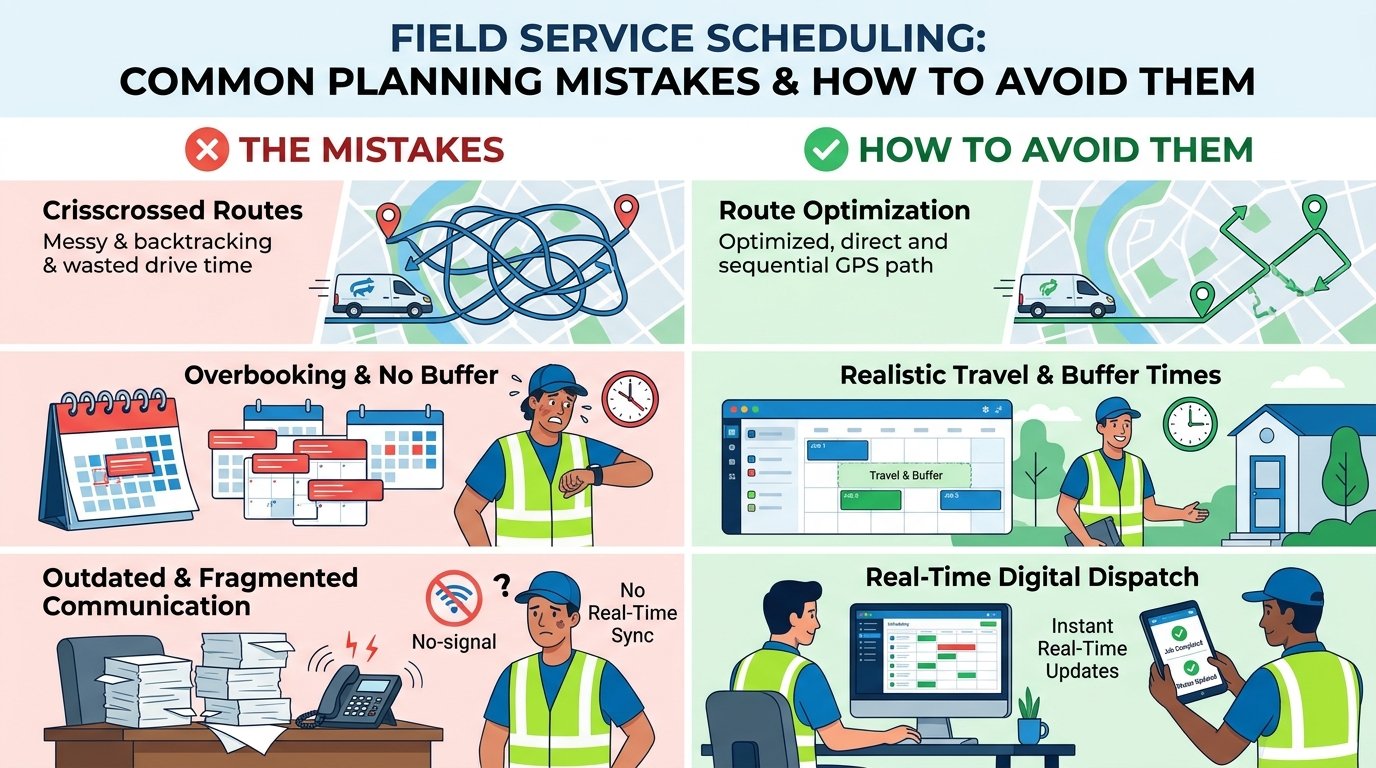
Scheduling problems are not always caused by major operational failures.
Often, small planning mistakes accumulate throughout the day. An unrealistic appointment estimate creates a delay, an unsuitable assignment requires additional assistance, and incomplete instructions interrupt a technician’s progress.
These situations can affect multiple employees and appointments.
Effective field service scheduling requires businesses to recognize common mistakes and establish practical methods for preventing them.
Mistake One: Treating Every Assignment Equally
Field assignments vary in complexity, location, and resource requirements.
Scheduling them using identical assumptions can create unrealistic expectations.
Why Standard Time Slots Can Be Misleading
A routine inspection may require considerably less time than a complicated technical assignment.
When both receive the same time allowance, technicians may struggle to complete demanding tasks within the schedule.
Managers should use assignment characteristics and previous experience to estimate durations more accurately.
Mistake Two: Ignoring Technician Suitability
Availability alone does not determine whether an employee is appropriate for a task.
Different assignments may require specific experience or preparation.
Match Skills With Work Requirements
Field service scheduling should consider technician capabilities alongside existing commitments.
Appropriate assignment matching can reduce unnecessary delays and repeated visits.
Managers should also maintain accurate information about employee experience.
Mistake Three: Underestimating Travel Requirements
Travel time can significantly influence daily productivity.
A schedule may appear manageable until technicians begin moving between distant locations.
Consider Geographic Planning
Grouping nearby assignments can reduce unnecessary movement.
However, scheduling teams must also account for appointment priorities and technical requirements.
Realistic travel allowances help prevent delays from spreading across subsequent appointments.
Mistake Four: Failing to Prepare for Changes
Unexpected events are common in field operations.
Technicians may encounter additional work, customers may cancel appointments, or urgent requests may arrive.
Build Reasonable Flexibility
Field service scheduling should avoid unnecessary rigidity.
Managers can identify appointments with flexible timing and maintain awareness of available resources.
This supports more informed adjustments when disruptions occur.
Mistake Five: Communicating Updates Too Late
A schedule becomes unreliable when employees work with outdated information.
Keep Instructions Current
Changes to appointment times, locations, or responsibilities should reach affected technicians promptly.
Office teams should also maintain consistent records of adjustments.
Clear communication reduces misunderstandings and unnecessary travel.
Mistake Six: Measuring Success Only by Completed Jobs
A high number of completed appointments does not automatically indicate effective scheduling.
Technicians may be working excessive hours or spending unnecessary time traveling.
Evaluate Multiple Performance Factors
Businesses should review appointment punctuality, workload balance, travel efficiency, and assignment quality.
Field service scheduling assessments become more useful when they consider overall operational performance.
This helps managers identify improvements that support sustainable productivity.
Mistake Seven: Ignoring Field Employee Feedback
Technicians experience scheduling decisions directly.
They often recognize practical difficulties that office-based planning may overlook.
Create Regular Feedback Opportunities
Managers should encourage employees to discuss unrealistic appointment durations, recurring travel problems, and incomplete job information.
These observations can improve future scheduling assumptions.
Developing Better Scheduling Habits
Avoiding planning mistakes requires ongoing attention rather than occasional adjustments.
Businesses should establish consistent procedures for reviewing assignments, allocating technicians, and communicating changes.
Regular performance discussions can help identify recurring difficulties before they become larger operational problems.
Field service scheduling improves when managers treat each completed working day as an opportunity to learn.
Conclusion
Many scheduling difficulties arise from preventable planning mistakes.
Unrealistic time estimates, unsuitable assignments, inadequate travel allowances, and delayed communication can create unnecessary operational pressure.
Field service scheduling becomes more reliable when businesses address these issues systematically.
By considering actual working conditions, maintaining accurate information, and involving technicians in improvement discussions, organizations can develop more realistic schedules.
Consistent planning habits support better resource utilization, fewer avoidable disruptions, and more dependable daily field operations.