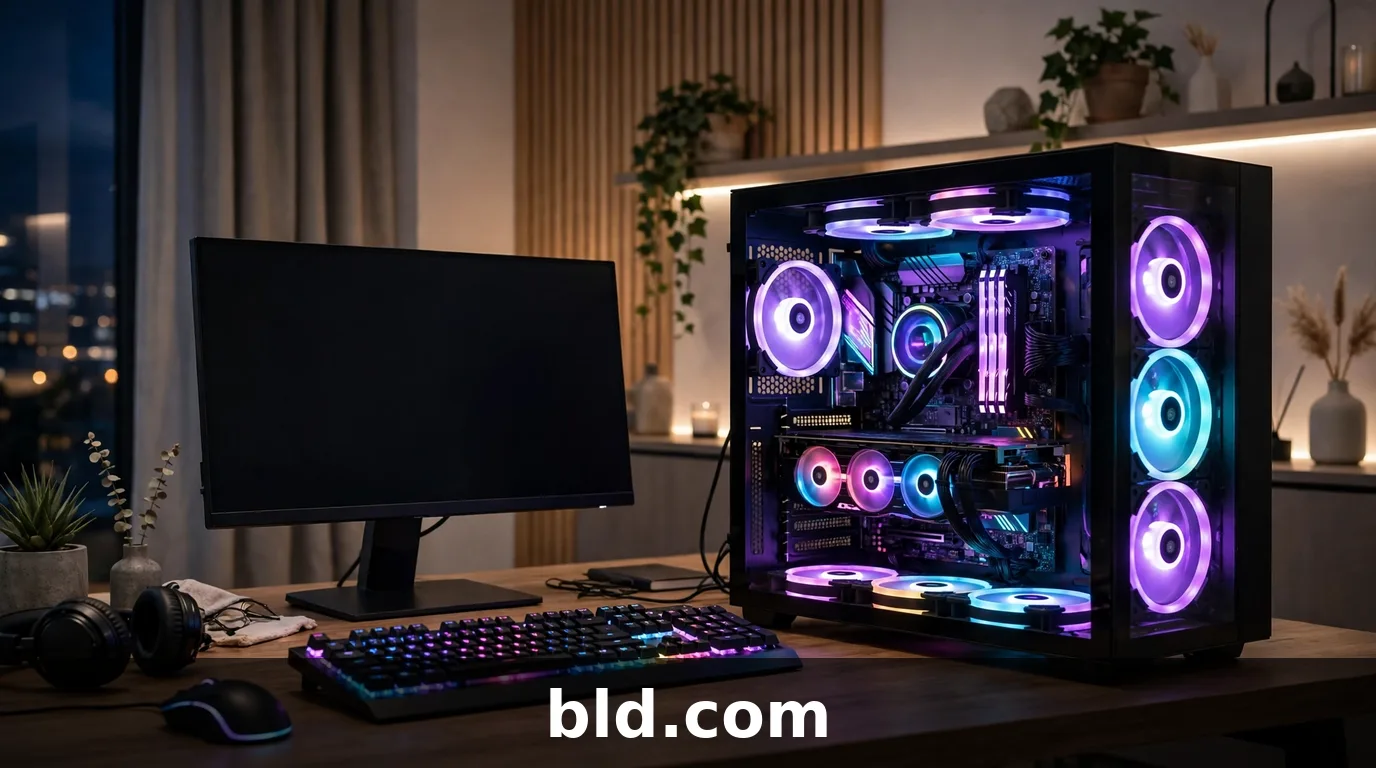
Type “bld.com” into your browser and you will not land on a glossy shop selling gaming PCs. When this page was checked in November 2026, the address returned a 403 “forbidden” response — the digital equivalent of a locked door with no sign on it. That surprises a lot of people, because the name BLD is genuinely famous in PC gaming. The catch is that the famous BLD, NZXT’s custom gaming PC building service, never actually lived at bld.com. It lived at letsbld.com.
So this article does two things. First, it answers the question most people are really asking — what was BLD, how did it work, and what happened to it? Second, it looks honestly at bld.com itself: what can be confirmed about the domain, what cannot, and why a three-letter address like this one is valuable even when it shows the public almost nothing.
What is bld.com, exactly?
bld.com is a three-letter .com domain name. That much is verifiable simply by visiting it. Beyond that, the honest answer is that very little about it is public. The address does not present a normal website to visitors, and direct visits are restricted — a 403 error rather than a homepage. No owner for the domain is publicly verified, and this article will not guess at one, because guesses about who owns a premium domain have a habit of being repeated as fact.
What can be said with confidence is what bld.com is not. It is not the public home of NZXT’s BLD service. That service — the one reviewed by gaming publications, the one thousands of people ordered PCs from — operated from letsbld.com. If you arrived here hoping to configure a gaming PC, bld.com is the wrong door, and it has apparently always been the wrong door.
That gap between a famous name and an unrelated domain is more common than people think, and it is exactly why searches for bld.com keep happening. People remember the brand, type the shortest possible address, and land somewhere that has nothing to do with it.
The BLD most people mean: NZXT’s custom PC building service
BLD was launched in 2017 by NZXT, a company already well known among PC enthusiasts for its cases, cooling products and accessories. At the time, buying a gaming PC involved an awkward choice. You could build one yourself, which meant researching every component and accepting the risk of a mistake. Or you could buy a pre-built machine from a big manufacturer, which often meant vague specifications, parts chosen for margin rather than performance, and no clear idea of how your games would actually run.
NZXT spotted the gap between those two options. BLD was designed for people who wanted the confidence of a hand-picked parts list without having to pick the parts — or build the machine — themselves.
How BLD worked
The process was refreshingly simple compared with the configurators of the day. Instead of scrolling through endless component menus, you started with two things: the games you wanted to play, and your budget. You could pick up to three games, set how much you were willing to spend, and BLD would recommend a complete build matched to both.
The clever part was what sat underneath. The recommendations were driven by data from NZXT’s CAM software, its PC monitoring tool, which had logged more than ten million hours of real gameplay data. Because CAM could see how actual games performed on actual hardware combinations, BLD could predict the frame rates a proposed build would deliver in the games you had chosen — not as a vague promise, but as a specific number.
Better still, NZXT put its money where its prediction was. The predicted frames per second were guaranteed to within 10 percent. If your finished PC missed that mark, you could return it for free. For anyone who had ever bought a “gaming PC” that turned out to be anything but, that guarantee was the whole pitch: performance you could hold the seller to.
Warranty, assembly and delivery
Every BLD machine was assembled by NZXT rather than shipped as a box of parts, and builds were shipped within roughly 48 hours — quick work for something configured to order. The PCs carried a two-year warranty covering parts and labour, which mattered because a custom build’s weak point is usually the question of who fixes it when something fails eighteen months in.
Taken together — pick your games, set your budget, get a build with a guaranteed frame rate, assembled and shipped in about two days, covered for two years — it was a genuinely consumer-friendly package, and the gaming press noticed.
What reviewers thought at launch
Launch coverage in 2017 from outlets including Kotaku and PC Gamer was positive. Reviewers picked up on the same points customers did: the process removed the intimidation from buying a gaming PC, the FPS predictions were a real differentiator rather than marketing fluff, and the machines themselves were sensibly specced. BLD quickly became one of the best-known names in the custom PC space, which is precisely why its name still drives searches today — and why so many of those searches end up typed into the wrong address.
From BLD to Player PCs — and the Flex rental experiment
Brands evolve, and BLD was no exception. In March 2023, NZXT revamped its gaming PC offering under a new name: “Player” PCs. The BLD branding was folded into this new line-up, so the service people had known since 2017 continued in a renamed, reorganised form. If you go looking for BLD today expecting the old letsbld.com experience, the Player range is its direct successor.
Then came a more controversial chapter. In the summer of 2024, NZXT launched Flex, a PC rental service built on the foundations of the BLD operation. Renting a gaming PC rather than buying one outright sounds flexible on paper — lower upfront cost, the option to hand the machine back — but Flex drew significant criticism over its rental pricing and practices. Critics argued that customers could end up paying far more over time than the PC was worth, and the programme became a talking point for all the wrong reasons.
The arc is worth understanding because it explains the current landscape. BLD built its reputation on a clear, buyer-friendly promise: a guaranteed level of performance for a stated price. The rental model that grew out of it was received very differently, and anyone researching the BLD name today will run into both stories — the well-regarded original service and the disputed rental scheme that followed years later.
Why a three-letter domain like bld.com is worth so much
Step back from the gaming story and bld.com is interesting in its own right, as a piece of digital real estate. There are only so many three-letter combinations in existence — 26 × 26 × 26 gives 17,576 possible letter strings, and every single three-letter .com was registered long ago. They cannot be minted, only bought from whoever holds them.
That scarcity makes short .com domains premium assets. They are easy to type, easy to remember, hard to misspell, and they carry an instant impression of establishment — a company on a three-letter .com looks like it has been around. Businesses pay accordingly; three-letter .com sales routinely reach five and six figures, and the most desirable combinations go higher still.
This also explains why a domain like bld.com might show the public almost nothing. Premium domains are often held as investments, parked, used privately, or kept behind restricted access while their owners wait for the right buyer or the right project. A 403 error tells you the door is closed. It does not tell you the building is empty — and it certainly does not entitle anyone to invent a story about who is inside.
Other things called BLD
Part of the confusion around the name is that “BLD” is a crowded set of initials, and plenty of unrelated organisations use similar names. A few examples help untangle things:
- BLD by NZXT — the custom gaming PC service covered above, formerly at letsbld.com, now succeeded by the Player PC range.
- BLD Companies — a commercial real estate firm based in Detroit, operating at bldcompanies.com. Real estate, not computers.
- Belt Drives Ltd — a motorcycle parts company whose initials are actually “BDL”, not BLD. Close enough to cause mix-ups in searches, different company entirely.
- bld.com — the three-letter domain itself, which does not publicly present itself as any of the above.
When three initials can point at a PC builder, a property firm and a motorcycle parts maker (nearly), checking the full name and the full web address before assuming anything is basic common sense.
How to avoid confusing the services
If you are trying to buy, research or contact anything called BLD, a few quick checks will keep you on the right track:
- Check the exact address. NZXT’s service was letsbld.com, not bld.com. One word makes all the difference.
- Look for the parent company. The gaming PC service was an NZXT product. If NZXT is not mentioned anywhere on the page you are reading, you are probably looking at a different BLD.
- Be careful with rental offers. The Flex programme that followed BLD attracted criticism over pricing. If you are offered a gaming PC on a rental basis, read the total cost over the full term before signing anything.
- Do not trust a bare domain. A short, expensive-looking address is not evidence of a legitimate shop. Restricted access and an absence of public information mean you cannot verify who is behind it.
- Search the full name. “BLD NZXT”, “BLD Companies Detroit” and similar fuller searches separate the namesakes far better than the initials alone.
Frequently asked questions
Is bld.com the website of NZXT’s BLD service?
No — not publicly, at least. NZXT’s BLD service operated at letsbld.com. The bld.com domain does not present itself as the NZXT service, and visits to it are restricted. No owner for bld.com is publicly verified.
What did BLD by NZXT actually do?
It built custom gaming PCs to order. You chose up to three games and a budget, and BLD recommended a build using performance data from NZXT’s CAM software, with predicted frame rates guaranteed to within 10 percent — or you could return the PC for free.
Does BLD by NZXT still exist?
The BLD brand was folded into NZXT’s “Player” PC range in a March 2023 revamp. NZXT later launched Flex, a PC rental service based on the BLD operation, in the summer of 2024, which drew criticism over its rental pricing and practices.
Why does bld.com show a 403 error?
A 403 response means the server is refusing to show the page to public visitors. Premium domains are often held privately, parked or access-restricted. It does not, by itself, reveal anything about who owns the domain or what it is used for.
Why are three-letter .com domains so valuable?
Supply is fixed — there are only 17,576 possible three-letter combinations and all are taken. Short .com addresses are memorable, easy to type and signal an established brand, so businesses and investors pay premium prices for them.
Who owns bld.com?
No owner is publicly verified, and this article does not speculate. Anyone claiming certainty about the ownership of bld.com without evidence should be treated with caution.
Conclusion
The story of bld.com is really two stories sharing three letters. One is a domain: scarce, valuable, and publicly saying almost nothing about itself — no verified owner, no open website, just a locked door. The other is the BLD people actually remember: NZXT’s 2017 custom PC service, with its game-first configurator, its FPS guarantee backed by millions of hours of CAM data, and its two-year warranty, later renamed into the Player range and spun into the controversial Flex rental programme. Keep the two separate — check the full address, check the parent company — and the confusion that brings most people to this page disappears.
Read Also: intempohealth.com mike braham (2026 Guide)