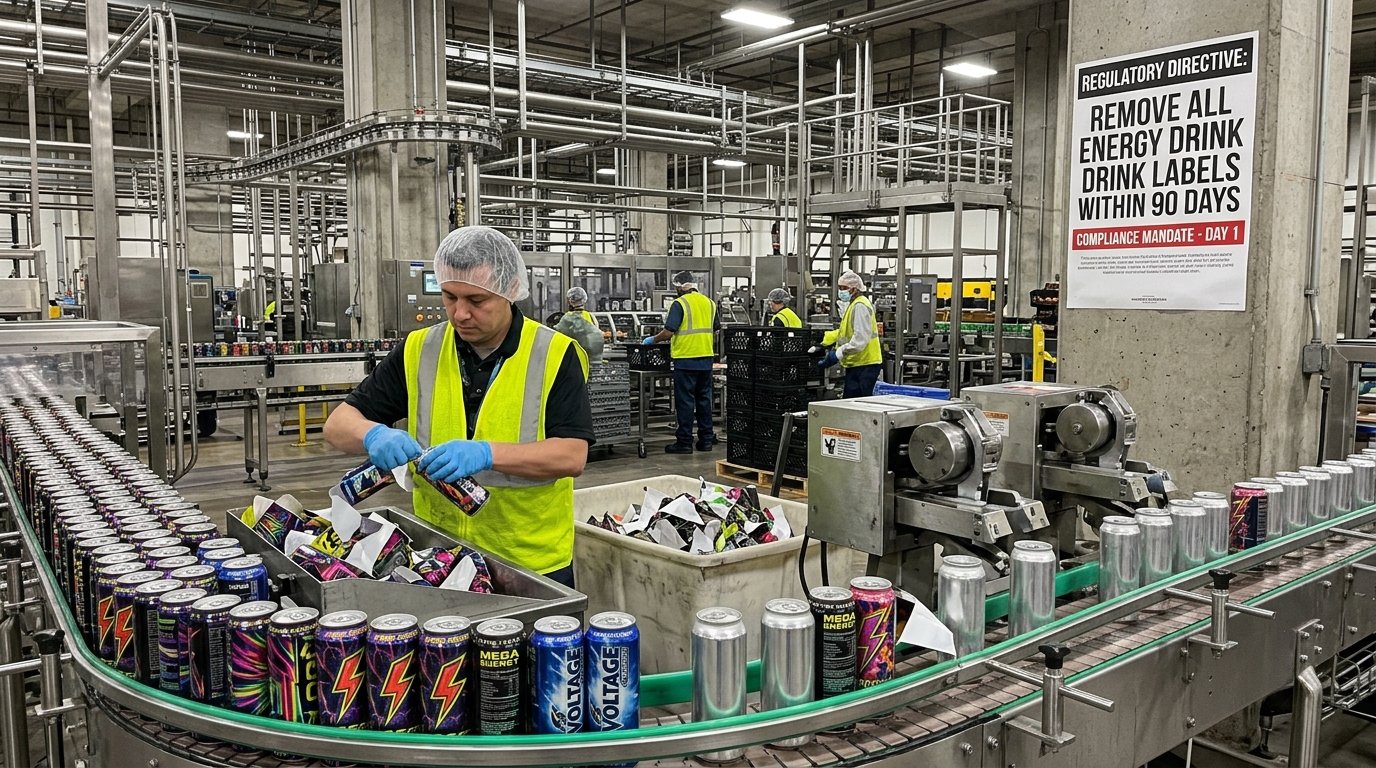
India’s food safety regulator has ordered beverage companies to remove the term “energy drink” from labels, marketing and advertising within 90 days. The order covers six products: Red Bull, Monster, PepsiCo’s Sting and Adrenaline Rush, Reliance’s Campa Gold Boost and Hell Energy. The drinks are not banned. They must be sold as caffeinated beverages instead.
This is an order from India, not the United States. That distinction matters, because the same brands sell the same drinks in the US under different rules. This article explains what the order says, why it was issued, where the court fight stands, and what US readers should take from it.
What the Order Says
On June 30, 2026, the Food Safety and Standards Authority of India, known as FSSAI, directed makers of high-caffeine beverages to stop using the description “energy drink.” On July 1, it issued notices covering six products: Red Bull Energy Drink, PepsiCo’s Adrenaline Rush Energy Drink and Sting Energy Drink, Reliance Consumer Products’ Campa Energy Drink-Gold Boost, Hell Energy, and Coca-Cola-backed Monster Energy.
The direction requires companies to withdraw labels, marketing material and advertisements carrying the term “energy” within 90 days. A July 17 letter asked state food safety authorities to enforce the direction. Early reports noted that the exact date from which the 90-day period is calculated was not immediately clear, so the deadline should be confirmed against the regulator’s own communication before it is quoted as a calendar date.
FSSAI also suggested an alternative. At a meeting with beverage companies on July 24, the regulator said the products could instead be labelled as “caffeinated beverages.”
Why the Regulator Acted
FSSAI’s case is about the category, not the liquid. The regulator says India has no notified standard for an “energy drink” category, so products sold under that name cannot rely on the Food Category System as permission to use it. The products fall under the standards for caffeinated beverages instead.
The regulator also objected to the claims printed next to the name. Phrases such as “vitalises body and mind,” “enhance focus,” “boost energy levels” and “aid in general weakness” are functional claims that, in FSSAI’s view, a food product may not make. The regulator’s position is that the term “energy drink” misleads consumers about what the product is and what it does.
This is not the first time the regulator has set rules for these drinks. In 2016, FSSAI set a maximum caffeine limit of 300 mg per litre for such drinks and made caffeine disclosure on labels mandatory. The complication is that in March 2024, the same regulator had allowed the term “energy drink” for products licensed under food category codes 14.1.4.1 and 14.1.4.2, which cover carbonated and non-carbonated water-based flavoured drinks. The industry has pointed to that 2024 advisory as a contradiction. FSSAI answers that a category code is not a naming permission.
At a meeting on July 20, FSSAI says the manufacturers agreed to drop the term from future production. The companies say they accepted the direction only under protest. That disagreement about what was agreed may matter as much as the chemistry when the case is decided.
The Drinks Are Not Banned. What Changes Instead
The order does not ban the beverages. The products may continue to be sold if their labelling, branding and promotional claims comply with the framework for caffeinated beverages.
Under that framework, the products carry warnings that they are not recommended for children, pregnant or lactating women, and people sensitive to caffeine, and that consumption should not exceed 500 ml per day. The caffeine content of the affected products was reported as between 145 mg and 300 mg per litre.
For shoppers, the practical change is on the outside of the can. The name changes, the warnings stay or become clearer, and the drink inside stays the same. PepsiCo has said it will drop the word “energy” from Sting to comply with applicable regulatory requirements.
The Court Fight So Far
The companies challenged the order, and the courts have so far ruled on process rather than on whether “energy drink” is a lawful description.
Red Bull went first. On September 29, 2026, the Delhi High Court set aside FSSAI’s order against Red Bull because the regulator had not issued a show-cause notice or given the company a chance to respond. The court left FSSAI free to pass a fresh order after a show-cause notice and a hearing.
On October 6, the court granted interim protection to PepsiCo, Monster Beverage and Reliance Consumer Products. They may sell existing stock manufactured up to that date, but their bottlers and contractors cannot produce further stock carrying the “energy drink” description.
PepsiCo has warned the court that a continued bar on new production could leave Sting and Adrenaline Rush out of stock across India within two months. In a filing dated October 28, FSSAI accused PepsiCo of deliberately marketing its high-caffeine beverages as energy drinks to mislead consumers, and opposed PepsiCo’s request for a 12-month extension to use its existing packaging material.
The Delhi High Court has not yet ruled on whether “energy drink” is a permissible descriptor. Further hearings were listed for October 30 and November 5, 2026. The legal position described here reflects reporting up to November 5, and it should be checked again before publication because the case is live.
What This Means If You Drink These Products
The label change does not change the caffeine in the can, so the useful habit stays the same: read the caffeine number on the label and count every source, including coffee, tea and other caffeinated drinks.
The US Food and Drug Administration has cited 400 mg of caffeine per day for most healthy adults as an amount not generally associated with negative effects. That is guidance, not a personal limit, and individual sensitivity varies. Children, pregnant women, breastfeeding women and people who are sensitive to caffeine should be cautious with high-caffeine drinks. In India, the required label warning states that consumption should not exceed 500 ml per day for these products.
If you buy these brands outside India, the label you see depends on local rules, not on the Indian order. A can bought in the United States will still say “energy drink” unless US rules change.
How the United States Is Different
There is no US rule like the Indian order. Energy drinks in the United States do not require FDA approval before sale, but they must follow safety and labeling laws.
The FDA regulates energy drinks as conventional foods or dietary supplements. A conventional beverage carries a Nutrition Facts panel. A liquid product marketed as a dietary supplement carries a Supplement Facts panel instead. FDA guidance from January 2014 explains how to tell the two apart, looking at the product name, packaging, serving size and wording.
No federal regulation requires conventional foods or beverages to list the exact amount of caffeine. The only consumer products that must list a specific caffeine amount are over-the-counter stimulant drugs, which carry a Drug Facts panel. Added caffeine must still be declared in the ingredient list, and most major energy drink makers now disclose the caffeine amount voluntarily.
Caffeine is Generally Recognized As Safe for cola-type beverages at 0.02 percent by weight. The American Beverage Association has published voluntary guidance recommending that energy drink makers list total caffeine from all sources, and include the statement “Not recommended for children, pregnant or breastfeeding women, or those sensitive to caffeine.” That wording is voluntary in the US, not a federal requirement. State rules can add their own requirements, so the label can differ from state to state.
What Brands Have to Change, and What It Costs
Ninety days is a short window for a packaging change. Companies must redesign labels, cans and bottles, rework advertising and sponsorship material, and update social media and retail displays, all while the court case continues. The cost is not only printing. The word “energy” is the core of these brands, and it is how shoppers find them on a shelf.
That is why the industry asked for more time, and why the Indian Beverage Association asked for a consultative and risk-based approach before enforcement. FSSAI opposed an open-ended 12-month extension to use existing packaging, citing public health concerns and the need to protect children from impulse consumption of products high in sugar and caffeine.
The stockout warning shows the commercial risk. If new production cannot carry the old label and new packaging is not ready, shelves empty. That pressure is part of why PepsiCo said it would drop “energy” from Sting rather than wait for the case to end.
What to Watch Next
Four things will decide how this ends. First, whether FSSAI issues fresh orders after show-cause notices and hearings, which the court has left it free to do. Second, the outcome of the hearings listed for late October and early November 2026. Third, whether state food safety authorities enforce the direction strictly, including seizures. Fourth, whether other countries watch India and review their own energy drink labelling, since the brands involved are global.
For readers, the simplest check is the label itself. If the words “energy drink” disappear from a can in India and “caffeinated beverage” takes their place, the order is being followed. If the words stay, the courts have intervened again.
Frequently Asked Questions
Are energy drinks banned in India?
No. The FSSAI direction is about the label, not the drink. The products may continue to be sold if they are labelled and marketed as caffeinated beverages and comply with the applicable food safety framework.
Which brands are affected by the order?
The July 1 notices covered six products: Red Bull Energy Drink, PepsiCo’s Adrenaline Rush and Sting, Reliance’s Campa Energy Drink-Gold Boost, Hell Energy, and Coca-Cola-backed Monster Energy.
Why did the regulator give 90 days?
The 90 days is the period given to withdraw labels, marketing material and advertisements carrying the term “energy.” Companies asked for more time to use existing packaging, and the regulator opposed an open-ended extension.
Does this order apply in the United States?
No. This is an order from India’s FSSAI. US energy drinks follow FDA rules, and there is no US federal rule requiring the term “energy drink” to be removed from labels.
How much caffeine is in these drinks?
The affected products were reported to contain between 145 mg and 300 mg of caffeine per litre. The exact amount varies by product, so check the label on the specific can. The FDA has cited 400 mg of caffeine per day for most healthy adults as an amount not generally associated with negative effects.
What will the drinks be called now?
FSSAI has suggested “caffeinated beverages” as the alternative description, which matches the category under which the products are regulated in India.
Conclusion
India’s regulator ordered six beverage brands to drop “energy drink” from their labels within 90 days because it says no standard exists for that category and the term misleads consumers. The drinks are not banned, the courts have so far ruled on process rather than on the words themselves, and the United States has no equivalent rule. The label on the can will tell you how the fight ends.