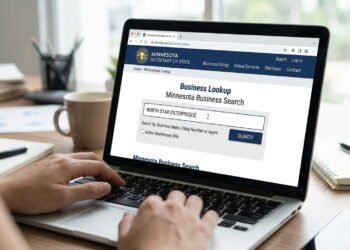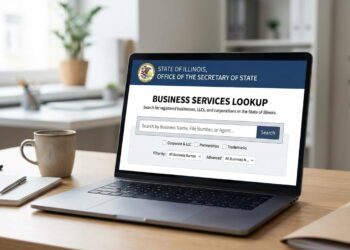
Starting a business, checking a company’s legitimacy, or researching a potential business partner often begins with one important step: verifying official business records. In the United States, a Secretary of state business lookup makes this process easier by allowing people to search for registered companies through state government databases.
Whether you are an entrepreneur planning to register a new company, a customer checking a business’s registration, or a professional conducting preliminary research, these online tools can provide useful information about a business’s legal status and registration history.
However, finding the correct record requires more than entering a company name into a search box. Each state maintains its own business database, search options vary, and the information available depends on the type of business entity and the state’s disclosure policies.
This guide explains how a Secretary of State business lookup works, where to find official records, what information you can access, and how to use the results effectively.
What Is a Secretary of State Business Lookup?
A Secretary of State business lookup is an online search tool that helps users find official records for businesses registered within a particular state. These databases are generally maintained by a state’s Secretary of State office or another government agency responsible for business registration.
The exact name of the service varies by state. Some states call it a business entity search, while others use terms such as corporate search, business search, or corporation records search.
Although the terminology differs, the purpose is similar. Users can search for registered business entities and review available details about their registration.
For example, someone researching a company in Texas would generally use the Texas Secretary of State’s business filing resources or the state’s designated business search service. Someone researching a company in Florida would use Florida’s official business records database, commonly known as Sunbiz.
These databases are especially useful when you need to determine whether a company appears in official state registration records.
Common reasons to perform a business lookup include:
- Checking whether a company is registered with the state.
- Confirming the official legal name of a business.
- Reviewing a company’s current registration status.
- Finding a registered agent when the information is publicly available.
- Checking formation dates and filing history.
- Researching a business before entering into a commercial relationship.
- Determining whether a proposed business name may already be in use.
It is important to understand that a state registration record does not automatically prove that a business is trustworthy, financially stable, or properly licensed for every activity it performs. The lookup is a valuable starting point, not a complete background investigation.
How to Perform a Secretary of State Business Lookup
Searching for a business is usually straightforward once you know which state to check. The following steps can help you locate the correct record without wasting time on unrelated websites.
Step 1: Identify the state.
Start by determining where the business was formed or registered. A company may operate in several states but have its original formation records in only one state.
For example, a company formed in Delaware may conduct business in California. Searching only California’s database might not reveal its original formation record unless the company is also registered there as a foreign entity.
Step 2: Visit the official government website.
Search for the state’s official Secretary of State website and locate its business entity search tool. Some states provide the search directly through their government website, while others use a separate official portal.
Use a government domain whenever possible. Commercial business directories can be helpful for preliminary research, but their information may be incomplete or outdated.
Step 3: Enter the business name.
Type the company’s legal name into the search field. If you receive too many results, try a more specific name or remove unnecessary punctuation.
For instance, searching for “Sunrise Marketing” may produce different results from searching for “Sunrise Marketing LLC.” Try both versions if the initial search does not identify the correct company.
Step 4: Review the search results.
Compare the names, entity types, locations, and other available details. Avoid assuming that the first result is the correct business, especially when several companies have similar names.
Step 5: Open the matching record.
Select the business that appears to match your research. Review its registration status, filing information, registered agent details, and other publicly available records.
Step 6: Verify important details.
If you need the information for a contract, transaction, compliance process, or legal matter, confirm that the record is current. You may also need to consult additional government agencies or request certified documents.
Following these steps helps reduce the risk of confusing businesses with similar names or relying on information from unofficial websites.
How to Find Business Records in Different States
The United States does not have one universal Secretary of State business database covering every company in all 50 states. Business registration is primarily handled at the state level, so you generally need to search the relevant state’s official system.
The following examples can help you find the right starting point.
- California: Visit the California Secretary of State website and look for its business entity search resources.
- Texas: Visit the Texas Secretary of State website for official business filing and entity information. Some searches or document requests may require an account or fee.
- Florida: Use Sunbiz, Florida’s official Division of Corporations website, to search business entities and review available filings.
- New York: Visit the New York Department of State’s Division of Corporations resources to search business records.
- Delaware: Use the Delaware Division of Corporations website to find entity information and available filing services.
- Pennsylvania: Visit the Pennsylvania Department of State’s business filing and entity search resources.
- Illinois: Use the Illinois Secretary of State’s business services to locate corporation and limited liability company records.
- Ohio: Visit the Ohio Secretary of State website and use its business search tools.
You can also locate the appropriate service by searching for the state name followed by “official business entity search.”
Before entering payment information or sensitive details, confirm that you are using the genuine government website. Some states charge fees for certificates, copies of filings, or specialized reports, even when basic searches are free.
If a business operates in multiple states, repeat the search in each relevant jurisdiction. This is particularly important when checking whether a company is authorized to conduct business outside the state where it was originally formed.
What Information Can You Find in a Business Lookup?
The information displayed in a Secretary of State business search depends on the state, entity type, and record available. Some databases provide detailed filing histories, while others show only basic registration information.
Understanding the most common fields helps you interpret the results accurately.
Legal business name
The legal name identifies the entity as recorded by the state. It may include a designation such as LLC, Inc., Corporation, or Limited Partnership.
A company’s legal name can differ from its public-facing brand. If a business operates under a different name, you may need to check local assumed-name or fictitious-name records as well.
Entity type
The entity type indicates the legal structure recorded for the business. Common examples include limited liability companies, corporations, limited partnerships, and nonprofit corporations.
This information can help you distinguish between businesses that use similar names but operate under different legal structures.
Registration status
Many databases show whether an entity is active, inactive, dissolved, suspended, or in another status recognized by the state.
Status terminology differs between jurisdictions. An inactive or dissolved record does not necessarily mean the company has never existed, and an active record does not guarantee that every aspect of its operation is compliant.
Formation or registration date
This field generally indicates when the entity was formed or registered in the state. It can help establish the company’s official registration timeline.
However, the formation date alone does not prove how long a business has operated commercially. A company may have existed informally or under another legal structure before its current registration.
Registered agent
A registered agent is generally designated to receive legal notices and official correspondence on behalf of a business entity.
Depending on state law, the record may show the agent’s name and a registered office address. This address should not automatically be treated as the company’s main operating location.
Principal or mailing address
Some states publish a principal office, mailing address, or other business address. Availability varies, and the address on file may not always reflect the location where customers interact with the company.
Filing history
Certain databases allow users to review annual reports, amendments, formation documents, name changes, dissolution filings, and other submissions.
Reviewing this history can provide useful context when you need to understand changes in ownership-related filings, company structure, or registration status. The specific information disclosed in these documents depends on state requirements.
How to Check Whether a Business Is Legitimate
A Secretary of State business lookup is a useful first step when researching a company, but it should not be your only verification method.
A business can have a valid state registration and still present risks to customers, suppliers, or investors. Similarly, some legitimate sole proprietors and other businesses may not appear in a particular state’s entity database because their legal structure or registration obligations differ.
For a more reliable assessment, combine the official record with other appropriate checks.
Confirm the legal identity. Compare the company’s registered name with its contracts, invoices, website, and other business documents. If the company uses a different brand name, ask how the names are connected.
Check its current status. Make sure the record reflects the status relevant to your transaction. If the status is unclear, consult the state agency’s definitions or contact its business services office.
Review licensing requirements. Certain professions and industries require separate licenses or permits. Depending on the business, you may need to check a state licensing board, local government office, or specialized regulatory agency.
Verify contact information. Compare publicly available business contact details with the information supplied by the company. Be cautious if important details conflict or the business refuses to explain discrepancies.
Look for independent evidence. Relevant sources may include professional licensing records, court records, regulatory notices, credible customer feedback, and documented business history. Evaluate these sources carefully rather than relying on a single review or online claim.
Use appropriate financial checks. If you are entering a significant commercial relationship, additional checks may be necessary. These could include credit references, financial statements, payment history, or professional due diligence, subject to applicable laws and permissions.
For high-value transactions, consider obtaining legal or compliance advice. A basic entity lookup cannot replace a full investigation when the potential consequences are substantial.
Common Problems With Secretary of State Business Searches
Even when using an official database, you may encounter missing records, confusing results, or information that appears inconsistent. Most issues can be resolved by adjusting the search or checking another official source.
The company does not appear in the results.
First, confirm that you selected the correct state. A company may be registered in a different jurisdiction, use another legal name, or operate under a brand name that differs from its registered entity name.
Try searching without punctuation or entity suffixes. You can also search by an entity identification number if you have one.
Multiple businesses have similar names.
Do not select a record based on the name alone. Compare the entity type, registration number, state, addresses, and filing dates to identify the correct business.
The information appears outdated.
Government databases may not reflect every change immediately. Recent filings can take time to process, and information displayed online may have limitations.
Check the latest available filings and contact the responsible agency if the discrepancy affects an important decision.
The business is listed as inactive.
Read the status details and determine what the particular state means by inactive, dissolved, suspended, or another designation. If the business claims that its registration is current, ask for supporting documentation and verify it independently.
The website requests payment.
Basic searches are often free, but not every service is. Certified copies, status certificates, expedited processing, and certain filing documents may carry fees.
Confirm the fee schedule on the official state website before paying. Be cautious of third-party websites that charge for information available directly from a government source.
The search tool is unavailable.
A state website may be temporarily down for maintenance or technical reasons. Try again later or look for an alternative official search page maintained by the same agency. Avoid relying on an unofficial database as definitive proof while the official service is unavailable.
Frequently Asked Questions About Secretary of State Business Lookup
Is a Secretary of State business lookup free?
In many states, basic business entity searches are free. However, fees may apply to certified copies, official certificates, document retrieval, or other services. Check the relevant state’s official website for current pricing.
Can I search for a business using its owner’s name?
Some states provide search options that can help identify entities associated with a person, but this functionality is not available everywhere. Many databases are designed primarily for searches by business name or entity number.
If the owner’s name does not produce a result, review the state’s search options and applicable public-record rules.
Can I find a company’s registered agent?
Often, yes. Many state databases disclose the registered agent and registered office address. The level of detail varies by state, and some information may be restricted or presented in separate filing documents.
Does an active business status prove that a company is trustworthy?
No. An active status generally indicates that the entity meets certain state registration criteria. It does not independently verify product quality, financial stability, licensing for every activity, or honest business practices.
Additional research is advisable before entering into an important business relationship.
Can I check a business registered in another state?
Yes. You can usually search the official database of the state where the business was formed or registered. If it operates across state lines, you may also need to check its foreign qualification or registration in other states.
What is the difference between a business lookup and a business license search?
Business lookup generally focuses on entity registration records. A business license search checks whether a company or professional holds a particular license or permit.
A business may need both entity registration and separate licenses, depending on its structure, location, and activities.
Can I reserve a business name through a lookup tool?
Not necessarily. A search tool helps you see whether a similar name appears in the records, but it does not automatically reserve that name or guarantee that it is legally available.
Follow the state’s official name availability and reservation procedures before relying on a proposed name.
What should I do if I cannot find a company?
Confirm the state, try alternative spellings, remove punctuation, and check the legal entity type. If the company still does not appear, contact the relevant state agency or investigate whether it operates under a different legal name.
Conclusion
A Secretary of State business lookup is a practical way to research companies, verify state registration details, and review publicly available business records. It can help entrepreneurs, customers, suppliers, and professionals make more informed decisions before entering into a business relationship.
The most reliable approach is to start with the official government database, search using accurate company information, and examine the complete record rather than relying on a name match alone. If the business operates in multiple states, check each relevant jurisdiction and investigate separate licensing requirements when necessary.
Remember that business registration is only one part of verifying a company’s credibility. Combining official state records with appropriate licensing checks, independent research, and supporting documentation provides a stronger basis for evaluating a business.
By understanding how these search tools work and recognizing their limitations, you can find relevant business information more efficiently and approach important decisions with greater confidence.
See also: Business Continuity Strategies: A Practical Guide for Every Business