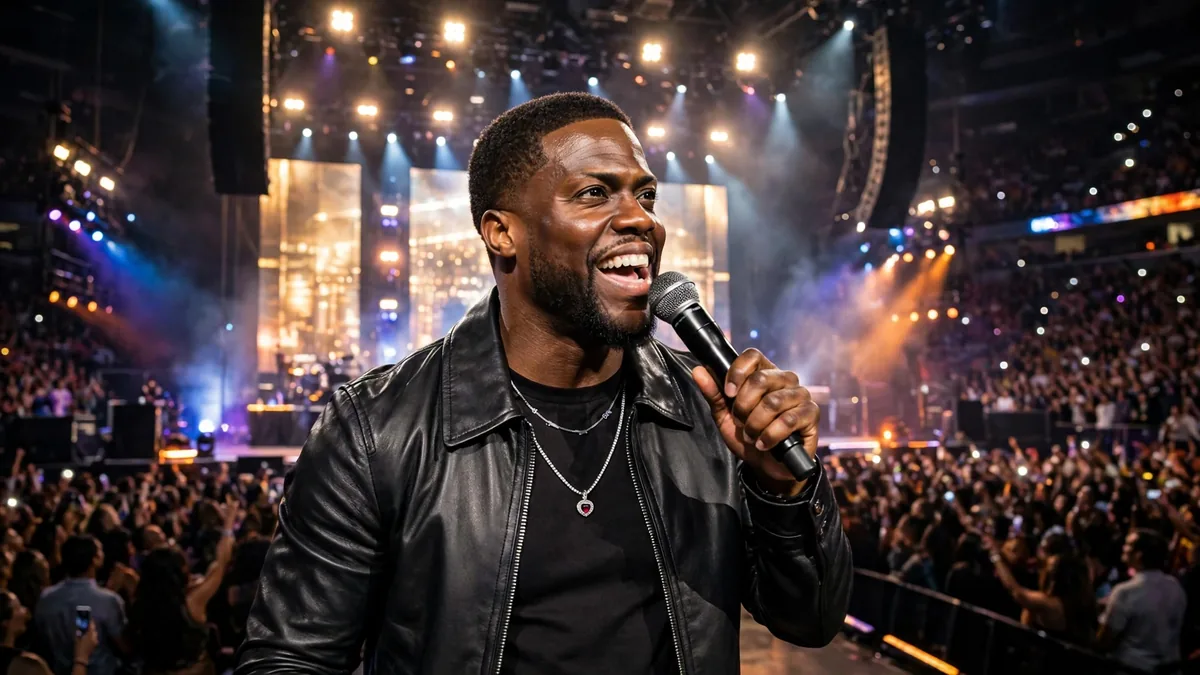
Kevin Hart went from performing in half-empty comedy clubs to selling out stadiums — and then did something smarter than most entertainers ever manage. He turned the fame into ownership. In 2026, estimates of Kevin Hart’s net worth run from about $300 million to $450 million, making him one of the richest comedians on the planet.
Why such a wide range? Because no single number is universally accepted, and that’s the most useful thing to understand up front. This guide breaks down the verified figures, explains why the sources disagree, and walks through the four engines — stand-up, film and TV, HartBeat Productions, and his brand portfolio — behind one of the most impressive fortunes in entertainment.
Kevin Hart Net Worth in 2026: The Short Answer
Here is what the trackers and aggregators actually say, as of 2026:
| Source | Estimate | Basis |
|---|---|---|
| Celebrity Net Worth (as reported by most trackers) | ~$300 million | Headline estimate built on Forbes-reported yearly earnings |
| Parade and Forbes-aligned aggregators | $400–$450 million | Higher assumed value of his private HartBeat equity |
| Investormint | ~$450 million | Documented earnings plus HartBeat’s peak valuation |
| A handful of trade outlets | Up to $500 million | Peak paper value of his HartBeat stake |
The honest answer, then, is a range: $300 million to $450 million. He is not a billionaire — but he has built a financial base that goes far beyond comedy paychecks. The entire disagreement between sources comes down to one question: how do you value his private company?
Why Estimates Range From $300M to $450M
Hart’s largest single asset is his roughly 85% stake in HartBeat, his media company. At its 2022 peak, HartBeat was valued at nearly $650 million — which would put his stake above $500 million on paper.
But that valuation has since fallen, and private company equity is illiquid: you can’t sell it as easily as stock. Trackers that discount illiquid private equity arrive at far lower totals (around $300 million) than those that use the peak paper value (up to $450–500 million).
None of these figures are audited or confirmed. They are estimates built on reported earnings, one reported company valuation from 2022, and assumptions about ownership percentages and liabilities. Treat every net-worth number you see online — including the ones in this article — as an educated estimate, not a bank statement.
One useful way to read these numbers comes from the evidence-first breakdowns published by finance trackers. They keep four things strictly separate: net-worth estimates (opinions about total wealth), pre-tax earnings (what Forbes actually reports each year), tour grosses (ticket revenue before costs and splits), and private-company valuations (what investors paid for a minority stake in 2022). Mixing those categories is how inflated headlines get made. The $87.5 million Forbes figure, for example, is pre-tax earnings before management fees — real money earned in a year, but not the same thing as net worth.
The Four Engines of His Fortune
Hart’s wealth comes from multiple sources, not just his work as a comedian and actor. Over the years he expanded into business, endorsements, and investments, creating a diverse portfolio that keeps growing. Four engines drive it.
Stand-Up Comedy: Where It All Started
Before Hollywood, Hart spent years performing in comedy clubs and small venues. His breakthrough came with specials like Laugh at My Pain and Seriously Funny, which brought him national recognition. As his popularity grew, he began selling out arenas worldwide.

The numbers on touring are striking. His 2011 Laugh at My Pain tour grossed more than $15 million and ranked among the year’s top-selling comedy tours. The What Now? tour ran from April 2015 to August 2016, and its filmed show drew 53,000 people to Lincoln Financial Field in Philadelphia. Forbes reported that his What Now? tour run generated around $70 million.
Later runs included Irresponsible, Reality Check, and Acting My Age, plus specials released on Netflix. Pollstar reported the Reality Check tour grossed $50.042 million in its 2023 mid-year window, and its 2026 comedy-tour chart logged $19.624 million across 33 reported shows and 161,464 tickets. Outside estimates put arena-show grosses at $1–3 million each and yearly stand-up income at $40–60 million — those are third-party estimates, not reported figures, but they show the scale.
In 2024, Hart received the Mark Twain Prize for American Humor, American comedy’s highest honor — a sign of how far his reputation has traveled from those early club days.
Movies and Television
Stand-up gave him an audience; movies made him famous. Hart became a reliable box-office draw with franchises and comedies including Jumanji, Ride Along, Central Intelligence, and The Secret Life of Pets. At his peak, his salary per film is reported in the $10 million to $30 million-plus range.
He also locked in streaming-era deals: an exclusive film and first-look agreement with Netflix, plus a multi-year HartBeat agreement with SiriusXM. These deals turn one-off acting paychecks into recurring revenue — exactly the kind of leverage that separates wealthy entertainers from merely well-paid ones.
His film career also includes voice work and ensemble hits that kept him visible between tours. The pattern was deliberate: movies expanded his audience beyond comedy fans, and that bigger audience then bought more tour tickets and watched more specials. Each engine fed the others. His chat show Hart to Heart, which debuted in 2021, added a long-form interview format to the mix and gave the HartBeat brand another recurring property.
HartBeat Productions: The $650M Valuation Anchor
HartBeat Productions, founded in 2009, is Hart’s single most valuable asset. The company produces film, television, live entertainment, comedy specials, and digital content across theatrical, streaming, and emerging platforms.

The key facts: Hart controls roughly 85% of the company, it was valued at about $650 million in 2022, and private-equity firm Abry invested $100 million for a minority stake. That $100 million was capital invested into the company — not a personal payout to Hart — but it set the valuation benchmark every net-worth estimate since has argued about.
This is the asset that makes Hart different from a comedian who just tours and acts. A comedian earns a lot from touring; a business owner keeps making money from a company even on nights with no show. Hart has spent years moving in that direction, and a growing share of his wealth now comes from the businesses built around his name.
Brands, Endorsements, and Gran Coramino
Beyond entertainment, Hart expanded into consumer brands. The standout is Gran Coramino, his tequila brand, which has reportedly surpassed $200 million in cumulative consumer retail sales, according to Shanken News Daily. Note the distinction: that’s retail sales across the brand, not company profit or Hart’s personal income — but it shows real commercial traction, not a vanity label.
Add multi-million-dollar endorsement deals across his career, and the brand portfolio becomes a meaningful third pillar alongside touring and HartBeat.
Forbes Earnings Timeline
Forbes has tracked Hart’s pre-tax earnings for over a decade, providing some of the most credible benchmarks available:
| Period | Forbes-estimated earnings | Context |
|---|---|---|
| June 2015 – June 2016 | $87.5 million | Peak year: touring, merchandise, and film overlap |
| June 2017 – June 2018 | $57 million | Continued touring and film work |
| June 2018 – June 2019 | $59 million | Among the highest-earning stand-ups that year |
| 2020 | $39 million | Pandemic-reduced touring |
| 2024 | $81 million net / $108 million gross | Reported February 2024 |
His annualized earning power in active years consistently reaches $60–100+ million. Stack a decade of those years on top of each other, add the HartBeat equity, and the $300–450 million range starts to make sense.
From Philadelphia to the Top: A Short Biography
Kevin Hart was born on July 6, 1979, in Philadelphia, Pennsylvania. His childhood was difficult: his father, Henry, struggled with drug addiction and was often in jail, and Hart was raised primarily by his mother, Nancy, who worked as a systems analyst. He has said he learned to use humor as a way of coping with his family problems — and discovered his talent for comedy in the process.
After graduating from George Washington High School, he briefly attended the Community College of Philadelphia before dropping out and moving to New York City. He worked as a shoe salesman while performing at comedy clubs under the name “Lil Kev.” He won several amateur competitions, caught the attention of Judd Apatow, and landed a recurring role on the TV series Undeclared in 2001 — his first big break.
What followed was more than two decades of relentless output: stand-up specials, arena tours, blockbuster films, and eventually a media company. Along the way he collected mainstream recognition — BET Awards, Teen Choice Awards, and People’s Choice Awards for his comedy specials and film work — the kind of honors that cement a mainstream career rather than just a cult following. His extraordinary work ethic contributed as much to his success as his jokes.
Frequently Asked Questions
What is Kevin Hart’s net worth in 2026?
Estimates range from about $300 million to $450 million. Celebrity Net Worth’s headline figure is most often reported around $300 million, while aggregators like Parade and Investormint put it at $400–450 million. The gap comes from different valuations of his private stake in HartBeat.
Is Kevin Hart a billionaire?
No. Even the most generous estimates place him at roughly half a billion dollars at the absolute peak of paper valuations. He is, however, one of the wealthiest comedians in the world.
What is HartBeat and how much is it worth?
HartBeat Productions is Hart’s media company, founded in 2009. It produces film, TV, live entertainment, and digital content. It was valued at about $650 million in 2022, when Abry invested $100 million for a minority stake. Hart owns roughly 85% of it.
How much does Kevin Hart make per show?
Outside estimates put arena-show grosses at $1–3 million each, with yearly stand-up income estimated at $40–60 million. These are third-party estimates, not reported figures. Verified Pollstar data shows his Reality Check tour grossed $50.042 million in its 2023 mid-year window.
What was Kevin Hart’s highest-earning year?
According to Forbes, the period from June 2015 to June 2016, when he earned an estimated $87.5 million pre-tax — the peak overlap of his biggest tour, merchandise, and film work.
What businesses does Kevin Hart own?
His main asset is HartBeat Productions (85% stake). He also owns the Gran Coramino tequila brand, which has surpassed $200 million in cumulative retail sales, and holds various endorsement deals plus streaming agreements with Netflix and SiriusXM.
How did Kevin Hart get rich?
In three stages. First, stand-up touring built him a loyal audience and tens of millions in ticket revenue. Second, film stardom multiplied that audience and his per-project pay. Third — and most importantly — he converted fame into ownership: a majority stake in HartBeat Productions, a tequila brand, and long-term streaming deals. The third stage is what turned high income into lasting wealth.
Does Kevin Hart still do stand-up?
Yes. After tours like Irresponsible and Reality Check, he continued with Acting My Age, and Pollstar’s 2026 comedy-tour chart logged $19.624 million across 33 reported shows. Stand-up remains the foundation of his brand even as business takes up more of his wealth.
The Bottom Line
Kevin Hart’s net worth in 2026 sits somewhere between $300 million and $450 million, depending on how you value HartBeat. The exact number matters less than the pattern: he converted stand-up fame into film stardom, then converted stardom into ownership — of a production company, of brands, of deal flow that pays him whether or not he’s on stage.
That is the real lesson of the Kevin Hart fortune. Talent got him the audience. Ownership kept the money.
It’s also worth remembering what the range itself tells you. When reputable trackers disagree by $150 million, it usually means the wealth is real but concentrated in assets that are hard to price — private equity, brand value, future deal flow. Cash in a bank account is easy to count. An 85% stake in a private media company is not. Hart’s fortune is the second kind: built, not just earned.
Read Also: 「毒を食らわば愛まで(Doku wo Kurawaba ai Made)」とは?あらすじ・登場人物・魅力を徹底解説